Malaysia recorded a staggering 4,017,161 Internet-borne cyberthreats in the first quarter of 2025, according to new data from Kaspersky. This translates to more than 44,000 daily attacks, reflecting a rising trend in cybercrime coinciding with the disbursement of the Sumbangan Tunai Rahmah (STR) government financial aid during the March–April period.
Kaspersky’s analysis, gathered through its global telemetry system — the Kaspersky Security Network (KSN) — suggests that threat actors are capitalising on periods of heightened digital activity among citizens.
Photo for illustrative purposes only. | Photo by weerapatkiatdumrong from Getty Images (via Canva Pro) and Vertigo3d from Getty Images Signature (via Canva Pro) / NHA File Photo
A significant proportion of these cyberthreats stems from phishing scams distributed through popular messaging platforms such as WhatsApp and Telegram. These scams often impersonate official STR notifications, tricking recipients into clicking malicious links under the guise of verifying payment statuses.
The phishing messages are primarily written in Malay and Chinese, mimicking legitimate government communication and often accompanied by fake screenshots of government websites. Clicking these links can lead to data theft, account lockouts, or compromised messaging apps.
“Cybercriminals today exploit trust, urgency, and everyday habits of users. The recent wave of phishing attacks demonstrates how quickly threat actors subtly adapt their tactics to local events and time-sensitive situations. A single tap on a malicious link can be enough to compromise personal data, often without the victim realising it. As cyber risks grow more personal and sophisticated, protection must be just as seamless. Malaysians’ digital life deserves complete protection, not just reactive defence,” said Adrian Hia, Managing Director for Asia Pacific at Kaspersky.
The problem has become widespread enough to prompt Deputy Communications Minister Teo Nie Ching to issue a public warning on her official Facebook page. She reminded users to avoid unfamiliar links and to only trust websites ending with “.gov.my”, the standard domain for Malaysian government websites.
Cybersecurity Guidance for Malaysians
To counter these rising threats, Kaspersky advises the public to follow these key practices:
Avoid SMS messages containing links, personal data requests or callback numbers. Since 1 September 2024, such elements have been banned in SMS communications by the Malaysian Communications and Multimedia Commission (MCMC).
Verify all links and ensure domains end with “.gov.my” when dealing with government websites.
Never click on embedded links from unknown senders. Instead, manually type the official website URL.
Ignore alarming messages requesting passwords or banking details via messaging platforms.
Activate two-factor authentication (2FA) on apps like WhatsApp and Telegram to secure accounts from takeover.
Use reputable security software that offers real-time phishing and malware protection.
The rise in scams during STR disbursements is part of a broader pattern in Southeast Asia, where cybercriminals increasingly tailor their attacks to local developments and social behaviour.
As cyberthreats grow in volume and sophistication, experts are urging Malaysians to stay informed and adopt preventive digital habits — especially during periods of public financial distribution when users are most vulnerable.
In the dynamic landscape of Asian business, where innovation and responsibility are increasingly intertwined, certain individuals stand out as catalysts for meaningful change. Esther Chow, the sharp and forward-thinking head of product for Lestar at Mandrill Tech, is undoubtedly one such figure.
As the driving force behind the groundbreaking Lestar ESG platform, Esther is not just navigating the complexities of environmental, social, and governance factors; she’s actively reshaping how businesses in the region approach sustainability, transforming it from a burdensome obligation into a strategic advantage.
Esther Chow, head of product for Lestar at Mandrill Tech Sdn Bhd. | Photo by Lestar / NHA File Photo
Esther’s journey to the helm of Lestar is rooted in a deep-seated commitment to efficiency and growth. “My career has always centred on optimising business operations,” she explains, her pragmatic approach evident even in conversation.
“When Mandrill Tech asked me to seek new efficiency levers, I turned the same lens outward and spotted a bigger hurdle: companies were scrambling to meet sustainability mandates yet struggled to prove any commercial return. Compliance felt like a cost centre, not a value driver.”
This observation sparked a conviction: genuine sustainability and long-term profitability are not mutually exclusive but intrinsically linked. It was this belief that laid the foundation for Lestar, an AI-powered platform designed to convert ESG obligations into tangible business advantages.
The core problem Lestar tackles is one familiar to many organisations: the cumbersome and often inefficient process of ESG disclosure. As Esther elaborates, “Most organisations still wrestle with spreadsheets, siloed systems, and manual consolidation to satisfy ESG disclosure requirements. The process is slow, costly and error-prone, yielding static and quickly outdated reports that add little strategic value.”
Lestar offers a refreshing alternative, streamlining data capture, automatically mapping it to global frameworks, and employing AI to identify anomalies and gaps. The result is a dynamic “single source of ESG truth,” empowering finance, sustainability, and board teams with real-time insights for confident strategic decision-making.
The values underpinning both Mandrill Tech and Lestar are clear: transparency, impact, and perpetual learning. For Esther, Lestar is the tangible embodiment of these principles. The platform provides clients a clear line of sight into their ESG data, fosters accountability, and translates insights into measurable action.
Furthermore, recognising the ever-evolving nature of sustainability standards, Lestar’s architecture is built for continuous enhancement, ensuring clients remain at the forefront of best practice. The overarching mission is ambitious yet clear: to deliver enterprise-grade sustainability analytics affordably to companies of all sizes, across the board.
Bringing such a comprehensive platform to life was not without its challenges. Esther highlights the initial “data heterogeneity” hurdle, with ESG metrics scattered across disparate systems. The solution was a clever library of configurable connectors and mapping templates.
Navigating the “regulatory flux” of ever-changing disclosure requirements was another key challenge, overcome by designing Lestar’s schema with modular building blocks for seamless integration of new metrics.
Finally, addressing “change-management fatigue” within sustainability teams required a focus on simplicity, intuitive dashboards, and dedicated support, transforming initial scepticism into sustained engagement.
Looking to the future, Esther is brimming with exciting developments for Lestar. News Hub Asia readers will get an exclusive glimpse into upcoming features, including fully integrated carbon accounting modules for automated footprint analysis and Lestar Co-Pilot, an LLM-powered assistant that transforms data into compelling narratives for stakeholder engagement. The enhanced analytics engine will feature anomaly detection, identifying hidden risks, while piloting a live monitoring module will keep users ahead of evolving global ESG requirements and highlight disclosure gaps.
Beyond the impressive technical capabilities, Esther’s vision for Lestar’s impact is profound. She hopes to slash the time Malaysian companies spend on ESG disclosures by at least 60 per cent, freeing up valuable resources for strategic initiatives and innovation. This collective efficiency boost, she believes, will elevate national reporting standards and set a benchmark for the wider Asian region.
Ultimately, a reliable and real-time understanding of ESG performance will enable investors and lenders to channel capital towards businesses genuinely committed to climate resilience and social equity, fostering both economic growth and sustainable development.
For those in the tech industry eager to contribute to impactful solutions like Lestar, Esther offers insightful advice. She emphasises the importance of broadening one’s expertise beyond pure technology to gain a genuine understanding of the domain being served. She advocates for a holistic view of systems, focusing on easing friction points across the entire workflow, and stresses the need for a “learner’s mindset” in the rapidly evolving landscape of ESG and AI.
Above all, Esther champions empathy, urging individuals to step into the shoes of their users to create solutions that are not only innovative but also genuinely impactful and sustainable in the long run.
Esther Chow’s dedication and vision are not just shaping Lestar ESG; they are contributing to a more sustainable and responsible future for businesses across Asia. Her journey, driven by a passion for efficiency and a commitment to impactful solutions, serves as an inspiring example of how technology, when guided by a clear purpose, can be a powerful force for good.
As Lestar continues to evolve under her leadership, the platform promises to be a crucial tool in the region’s transition towards a more sustainable and prosperous future.
Glasgow, UK – OCULLOSPACE is pleased to announce the signing of a launch contract with Alba Orbital on 9th April 2025, a leading provider of PocketQube satellite launch services. This partnership will facilitate the deployment of OCULLOSPACE’s “Elephant Juice” mission, utilising the DECIMAL-SAT1 1P PocketQube satellite, aboard Alba Orbital’s scheduled SpaceX launch in the first quarter of 2026.
(left) Tom Walkinshaw – Alba Orbital Founder/CEO and Franco Gan – OCULLOSPACE Founder officially signed a launch contract to deploy the “Elephant Juice” mission, in collaboration with Alba Orbital, targeting a March 2026 launch window. This milestone partnership leverages the power of PocketQube satellites to make space more accessible to all.
This agreement represents a significant step forward in OCULLOSPACE’s commitment to democratising access to space technology for educational purposes, particularly within Southeast Asia.
Mission Overview: Pioneering DNA Data Storage in Orbit
The “Elephant Juice” mission aims to explore the feasibility of long-term data storage in space using DNA encoding. The DECIMAL-SAT1 satellite will carry a specialised payload, developed in collaboration with BioSistemika and XexiconSat, capable of storing digital information within synthetic DNA sequences.
Participants will have the opportunity to encode personal messages into these DNA sequences, creating a unique biological archive that will remain in orbit for an extended period. This mission leverages the exceptional storage density and longevity of DNA, offering a novel approach to preserving human expression beyond Earth.
Drawing Inspiration from the Voyager Golden Record
The “Elephant Juice” mission is conceptually inspired by NASA’s Voyager Golden Record, launched in 1977. That mission carried a record of sounds and images representing humanity to potential extraterrestrial civilisations. OCULLOSPACE seeks to extend this concept, enabling individuals to contribute their own digital narratives to a collective orbital archive.
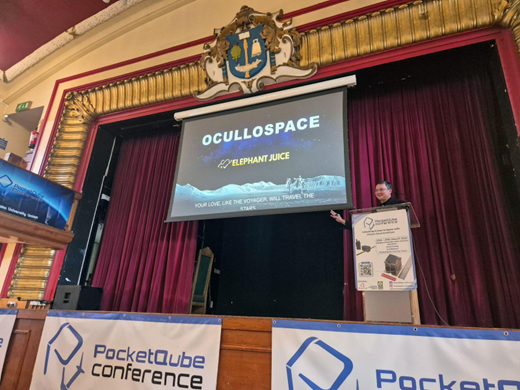
Earlier in March 2025, Franco Gan – CEO of OCULLOSPACE, as one of the featured speakers at the PocketQube Conference 2025, Glosgow University Union, unveiled the “Elephant Juice” mission – an emotionally-driven and scientifically-grounded initiative that uses DNA-encoded message technology to preserve human stories, love and legacy beyond. The keynote presentation highlighted how this mission redefines the use of miniaturized space technology while fostering a new era of global connection through space.
Educational Outreach and Philanthropic Impact
Beyond technological advancement, the “Elephant Juice” mission is designed to foster educational engagement and support philanthropic initiatives. Participation in the mission will contribute to funding non-governmental organisations dedicated to empowering children and facilitating their educational development.
The DECIMAL-SAT1 satellite will be deployed into low Earth orbit using Alba Orbital’s established AlbaPod deployer, a system with a proven track record of successful satellite deployments. This deployment will provide a valuable opportunity for scientific exploration and educational outreach, showcasing the potential of space technology to inspire future generations.
—————————————–
About OCULLOSPACE
OCULLOSPACE is dedicated to cultivating the next generation of space technologists across the ASEAN region. We achieve this through immersive, project-based learning initiatives, equipping students with essential skills and fostering pathways to meaningful careers within the space sector. Our pioneering “Elephant Juice” mission exemplifies this commitment, offering a unique opportunity to encode personal narratives into DNA and launch them into Earth orbit, creating enduring legacies within the cosmos.
Discover more about our work and the “Elephant Juice” mission at www.ocullospace.com and www.elephantjuice.org.
—————————————–
About Alba Orbital
Alba Orbital (UK, USA, Germany) is the world’s leading PocketQube company, having delivered 53 pico-satellites on orbit to date. Alba is a vertically integrated NewSpace company ‘democratising access to space,’ providing turnkey solutions from advanced pico-satellite platforms, low-cost launch opportunities, and ground station services. Alba has worked with over 30 customers across the globe. Contact: [email protected].
Singapore’s Changi Airport (SIN) has been crowned the Overall Winner at the Routes Asia 2025 Awards, while also securing the top honor in the Over 20 Million Passengers category.
The global hub was one of five winners recognized at the event, which celebrates excellence in airport and destination marketing. Other winners at the ceremony – held during Routes Asia 2025 in Perth, Australia – included Cairns Airport (CNS), Adelaide Airport (ADL), the Philippine Department of Tourism, and Cebu Pacific.
“We are truly grateful to our airline partners for their close collaboration and partnership,” Changi Airport’s Vice President, Market Development Peh Ke-Wei said. “Together, we have made significant strides in taking Changi Airport’s passenger traffic to new heights and strategically expanding its global connectivity to provide travelers with more options.
In 2024, Changi Airport handled 67.7 million passenger movements, marking a 15% year-on-year increase. Airfreight throughput also rose 15%. The airport welcomed 10 new airlines – including Air Canada, Air Japan, and Peach – and launched 20 new routes to destinations such as Brussels, London Gatwick, and Vancouver.
In the Under 5 Million Passengers category, Cairns Airport was named the winner. Situated in one of Australia’s most aviation-dependent regions, the airport has implemented a market-specific, geographic approach to route development. In 2024, Cairns Airport secured key new international services, including China Eastern’s Lunar New Year flights, AirAsia Indonesia’s market entry, Fiji Airways’ direct Nadi service, and the return of Cathay Pacific.
Adelaide Airport claimed the award in the 5–20 Million Passengers category, having achieved record passenger traffic in 2024. The airport surpassed pre-pandemic levels with more than 8.5 million travelers – a 10% increase year-over-year. Key route developments included the return of Emirates’ daily service, China Southern Airlines’ relaunch, and Jetstar’s new Whitsunday Coast route. QantasLink also upgauged to Q400 aircraft, enhancing regional connectivity.
The Destination award went to the Philippine Department of Tourism, recognized for its role in expanding the country’s air connectivity. The department has supported airlines through strategic marketing campaigns, industry partnerships, and sustainable tourism initiatives. Its ‘Love the Philippines’ campaign has driven new route development, leading to new services to Cebu, Clark, and Davao. Other successes include Air France’s Paris-Manila route and Vietnam Airlines’ Hanoi-Manila flights.
Cebu Pacific won the Airline category. The Philippine LCC continued its rapid growth in 2024, launching 31 new routes – 19 domestic and 12 international. To support its long-term expansion, the airline placed the largest aircraft order in Philippine aviation history, committing to 152 Airbus aircraft in a $24 billion deal.
Finalists in the Airport and Destination categories were reviewed and scored by a panel of airline judges, while the Airline category was judged by a panel of editorial judges.
Gunaprasath Bupalan’s journey from crafting compelling copy to becoming a driving force in strategic communications speaks volumes about his ambition, transformation, and impact. His early work honed his expertise in narrative development, drawing on a deep understanding of mass communications, journalism, and public relations. This foundation proved invaluable as he transitioned into shaping corporate strategies and sustainability-focused branding initiatives. Through years of experience in editorial leadership, branding, and strategic communications, Gunaprasath has earned a reputation as a trusted advisor to major corporations.
From his editorial tenure as Managing Editor of 360Digest and Features Editor at NST Property Times, Real Spaces in Malay Main and Real Reserve in the Malaysian Reserve to his current role as a strategic consultant, Gunaprasath has remained committed to delivering powerful storytelling with a purpose. His insights have been sought after by numerous media platforms, including online portals, print publications, and Malaysian radio, further solidifying his reputation as an industry thought leader.
Pioneering Corporate Communications at Pentas Flora
Gunaprasath’s tenure as Head of Strategic Communications and Corporate Communications at Pentas Flora has been nothing short of transformative. Tasked with enhancing the company’s visibility and solidifying its role in Malaysia’s sustainability landscape, he has driven a communication strategy that not only educates but also inspires action.
Pentas Flora as a sponsor at the 2024 Toyota Gazoo Race.
Under his leadership, Pentas Flora has shifted public perception of waste management from a mere regulatory obligation to a crucial element in environmental stewardship. He has spearheaded impactful storytelling initiatives, developed data-driven campaigns, and forged strategic partnerships that highlight the company’s commitment to the circular economy.
His work in stakeholder engagement has strengthened Pentas Flora’s position as an industry leader, facilitating collaborations with government agencies, multinational corporations, and industry regulators. By fostering dialogue on responsible waste management, Gunaprasath has helped shape national sustainability discussions and drive progressive policies.
Forum conducted at KL Wellness City between Pentas Flora and Sunway Planetary, Tindakan Strategi as well as BMW Group Malaysia.
Pentas Flora
Revolutionising Waste Management and Sustainability
As a key player in Malaysia’s waste recovery sector, Pentas Flora has been at the forefront of sustainable waste solutions. The company’s approach to environmental responsibility is defined by its commitment to transforming hazardous waste into valuable resources, reducing carbon footprints, and advancing the principles of a circular economy.
According to the Malaysian Department of Environment, the country generates over 4 million metric tonnes of hazardous waste annually. Without proper waste recovery and management, this poses a significant threat to both environmental and public health. Pentas Flora’s initiatives directly combat this issue by repurposing used oils and hazardous waste into valuable resources, aligning with Malaysia’s environmental targets.
Re-refined Base Oil (RRBO) Group I SN150
Reinventing Industrial Sustainability
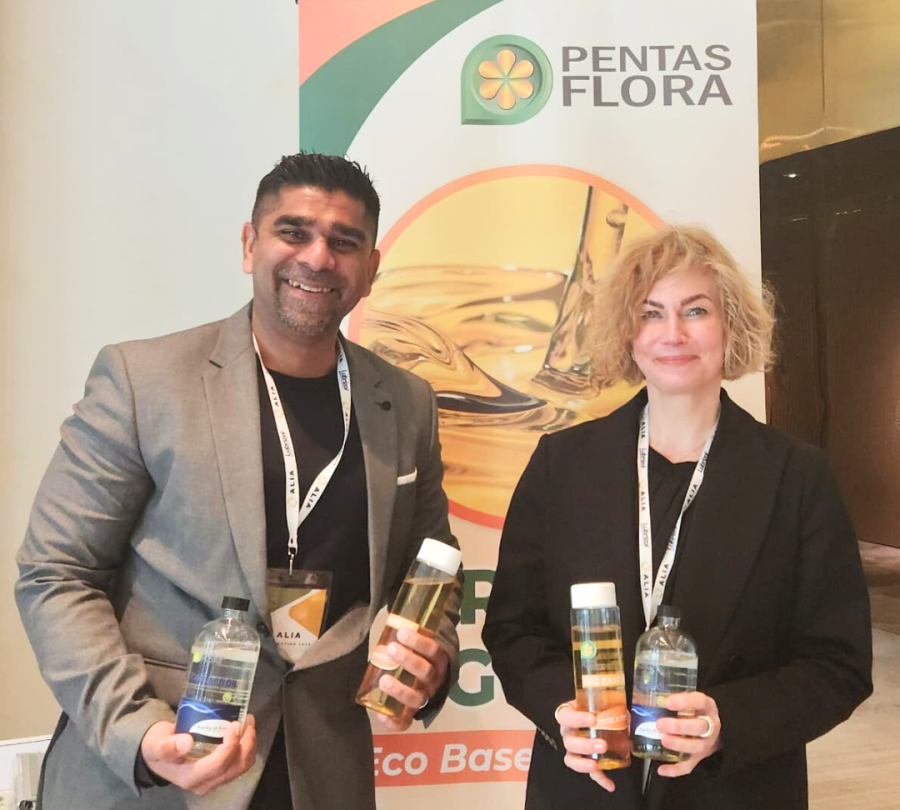
Gunaprasath with Inga Herrmann from Ergon International during the ALIA Conference in Vietnam, 2024.
Furthering its commitment to sustainability, Pentas Flora introduced Re-refined Base Oil (RRBO) Group I SN150 in 2022. As a clean and economical alternative to conventional fossil fuels, EBO reinforces the company’s dedication to reducing industrial waste and emissions. Highlighted by the late Group Executive Director, Mr. Oon Kin Seng, Re-refined Base Oil (RRBO) Group I SN150 is up to 40 times more cost-effective than traditional options, proving that sustainability can be both practical and profitable.
Re-refined Base Oil (RRBO) Group II+ (N150) and RRBO Group III
Ashley Chong, Senior Vice President of Pentas Flora Group with Charlotte Kehoe, Chairperson of the Asian Lubricant Industry Association (ALIA) at the launch of Pentas Flora RRBO Group II+ (N150)
The Future of Sustainable Lubricants
One of Pentas Flora’s most groundbreaking innovations is its development of Re-refined Base Oil (RRBO) Group II+ (N150) and RRBO Group III which were launched In 2024 – a milestone that sets Pentas Flora apart from any other Malaysian company, including re-refineries in other parts of South East Asia. This product not only reduces reliance on virgin base oils but also significantly lowers the environmental impact of lubricant production.
The global lubricants market consumes approximately of base oil annually, with virgin base oil production being a major contributor to carbon emissions. RRBO, on the other hand, reduces CO₂ emissions by up to 80% compared to virgin base oils. Furthermore, refining used oil requires only one-third of the energy needed to produce virgin base oil, significantly cutting down on energy consumption and industrial waste.
Pentas Flora’s influence extends beyond product innovation—it plays a crucial role in industry-wide collaborations that drive sustainability. A defining moment in 2024 was the company’s Memorandum of Understanding with Shell Malaysia Trading, a strategic initiative aimed at enhancing circular waste management through advanced recycling and re-refining solutions.
Additionally, the company’s partnership with BMW Group Malaysia under the RE:GENERATE programme showcases how automotive giants can integrate circular economy principles by repurposing used oils from BMW dealerships nationwide. These collaborations not only drive sustainability within corporate operations but also serve as a model for future industry-wide change.
During the MoU signing between Pentas Flora and BMW Group Malaysia.
Unmatched Logistical Strength and Infrastructure
Pentas Flora’s operational strength is backed by an extensive and highly efficient logistical framework. With over 170 trucks facilitating hazardous waste collection nationwide, the company ensures seamless waste management solutions. Additionally, its dedicated ship, Jupiter, is a game-changer in maritime waste management, collecting hazardous waste from both onshore and offshore vessels.
The company’s infrastructure includes a state-of-the-art RM500 million recovery facility in Selangor, Malaysia which operates around the clock to process waste oil into valuable resources. With the global hazardous waste market projected to reach USD 42 billion by 2027, Pentas Flora’s continuous infrastructure expansion reinforces its role as a leader in sustainable waste recovery and management.
Championing ESG, Sustainability, and Public Engagement
Beyond corporate communications, Gunaprasath has established himself as a leading voice in the sustainability discourse. His participation in industry talks, roundtable discussions, and forums has had a profound impact on Malaysia’s corporate sustainability landscape.
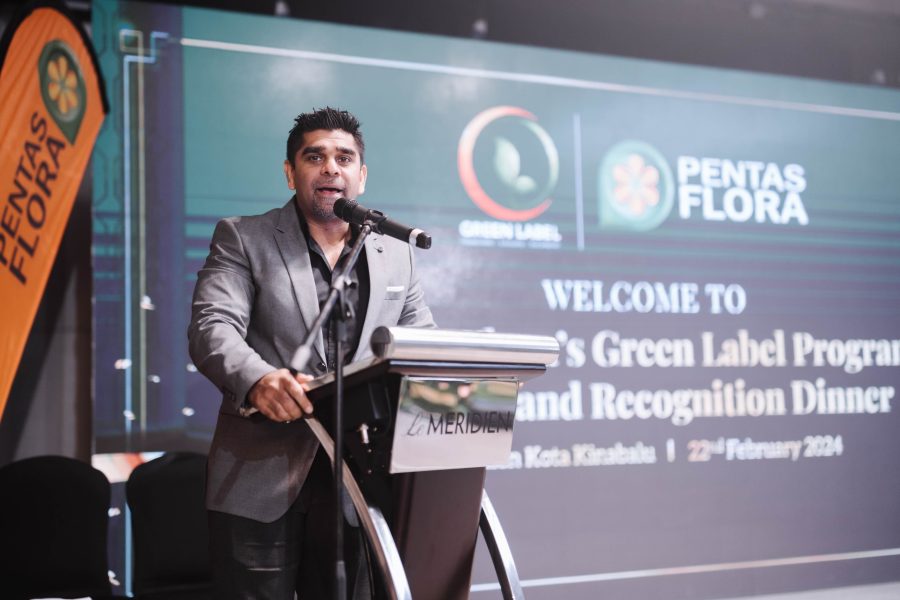
During the Launch of Pentas Flora Sabah Green Label Certification Ceremony.
He has been a featured speaker at the Malaysia Green Forum, addressing the critical role of corporate storytelling in fostering sustainable business practices. He has also moderated discussions on circular economy strategies, bringing together thought leaders to explore the future of waste management and environmental responsibility.
Gunaprasath’s advocacy for ESG (Environmental, Social, and Governance) compliance has influenced corporate policies, guiding businesses toward long-term sustainability commitments. His engagement in media platforms and industry conferences has reinforced the importance of ESG principles in driving corporate resilience and environmental impact.
Impact on Malaysia’s Sustainability Landscape
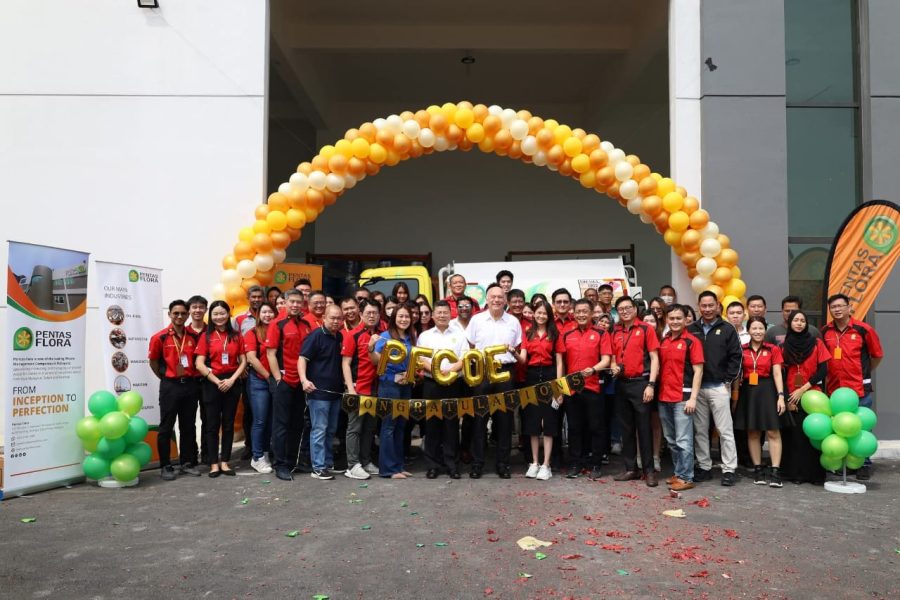
During the launch of Pentas Flora’s new Centre of Excellence (CoE).
Pentas Flora’s initiatives, under Gunaprasath’s communication leadership, have significantly contributed to Malaysia’s progress in sustainable waste management. By championing re-refined oils and circular economy principles, the company has helped bridge the gap between industrial growth and environmental conservation.
The transition to a circular economy is not just a global trend—it is an economic necessity. According to the Ellen MacArthur Foundation, a circular economy could generate USD 4.5 trillion in economic benefits by 2030. Pentas Flora’s pioneering efforts align with Malaysia’s sustainability goals, demonstrating that environmental responsibility and economic prosperity can coexist.
A Legacy of Innovation and Sustainability
Gunaprasath Bupalan’s journey is a powerful narrative of transformation, leadership, and impact. His ability to merge strategic communications with sustainability advocacy has not only elevated Pentas Flora’s corporate influence but has also driven significant progress in Malaysia’s environmental landscape.
Through innovative waste management solutions, groundbreaking product launches like RRBO and EBO, and strategic collaborations, Pentas Flora stands as a beacon of sustainability. The company continues to challenge industry norms, proving that responsible business practices can drive both environmental progress and economic success.
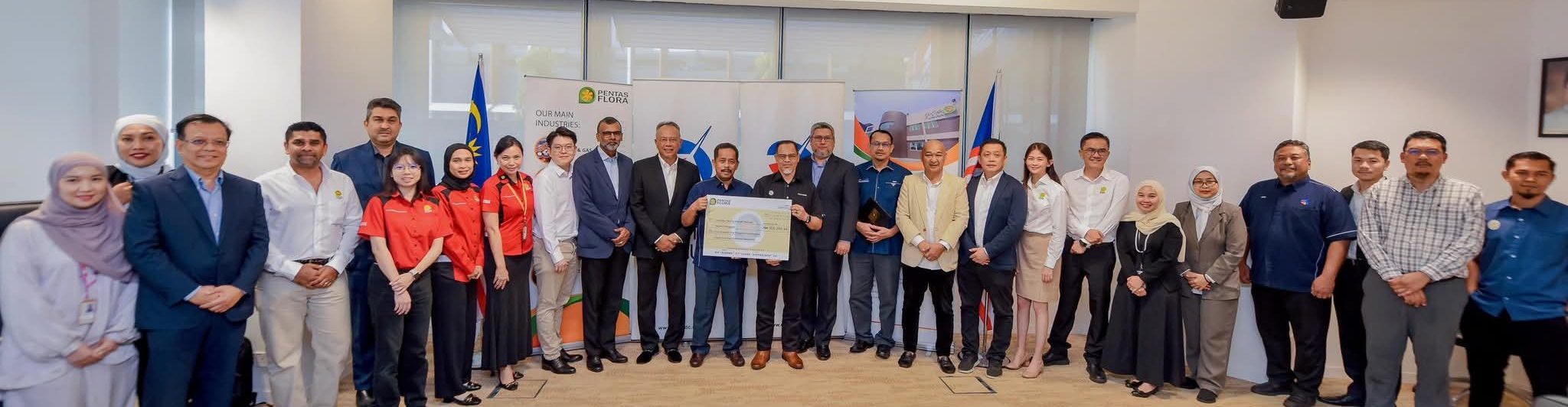
Pentas Flora at the acceptance of land lease offer Memorandum of Understanding (MoU) with the LTAWNT for the establishment of a RM100 million state-of-the-art recovery plant at Kerteh Biopolymer Park that will be developed in stages.
As the global economy pivots towards sustainable solutions, the work of leaders like Gunaprasath Bupalan becomes increasingly vital. His contributions to corporate communications, sustainability, and strategic branding ensure that businesses not only thrive in competitive markets but also leave a lasting positive impact on the planet.
As we step into 2025, exposure management company, Tenable has outlined key cybersecurity trends and insights from its experts that are set to define the year ahead. These predictions are designed to provide valuable context and perspective on the evolving threat landscape.
Jason Merrick, SVP of Product at Tenable | Photo by Tenable / NHA File Photo
Everything, everywhere, all at once is not sustainable without context
As the attack surface continues to expand and threat actors grow more sophisticated, cybersecurity teams will face an overwhelming flood of fragmented vulnerability and threat intelligence data. The days of linear attacks are fading, giving rise to multifaceted, rapid incursions that exploit numerous entry points. In this increasingly chaotic landscape, the inability to remediate everything, everywhere, all at once will make context king. Organisations that prioritise understanding the greatest risk to their business and the most critical vulnerabilities will win. This contextual approach will redefine vulnerability management, enabling cybersecurity teams to act strategically, swiftly, and with greater precision to mitigate threats effectively.
Bob Huber, CSO and Head of Research at Tenable | Photo by Tenable / NHA File Photo
AI adoption will outpace our ability to get educated on it and secure it
By 2025, AI adoption will likely have already outpaced our ability to educate users and secure these rapidly evolving technologies fully. As organisations prioritise efficiency and return on investment, the adoption of technologies like AI and cloud continues to surge. However, this swift evolution presents a critical challenge: the knowledge gap. Many users and organisations are struggling to keep pace with the education and training needed to comprehensively understand and protect these technologies. This creates a pressing dilemma, how can we safeguard innovations like AI and cloud when their complexity and growth outstrip our readiness? The challenge for CISOs lies in striking a balance between driving forward technological adoption and ensuring the security and resilience of these tools. Bridging this gap sooner rather than later will be critical for organisations.
Liat Hayun, VP of product and research, Tenable Cloud Security | Photo by Tenable / NHA File Photo
Multicloud Security Will Dominate as CISOs Embrace Multi-Vendor Platforms
Multicloud strategies will become the standard in 2025. Enterprises will become increasingly wary of ‘putting all their eggs’ in one cloud service provider basket due to the centralised risk that a single cloud service provider poses. As a result, more and more CISOs will start to prioritise multi-vendor security platforms to ensure consistent protection across diverse environments (i.e., meeting compliance requirements and securely scaling AI-driven workloads).
Post-Breach Costs Will Spike, Forcing a Focus on Recovery Tools
As breaches become more frequent, post-breach costs will rise, pushing businesses to think critically about what data has been compromised and rethink their recovery strategies. The average cost of a data breach rose to almost USD 5 million in 2024, a 10 percent increase YoY. However, the true damage lies in downtime, reputational damages and regulatory fines, particularly in cloud-heavy industries. In 2025, businesses will pivot toward more robust post-breach playbooks, focusing on rapid incident response, data visibility, better containment protocols, and enhanced forensic capabilities to minimise fallout. This shift signals a broader evolution in cybersecurity, with organisations embracing a more balanced approach that prioritises both breach prevention and effective recovery.
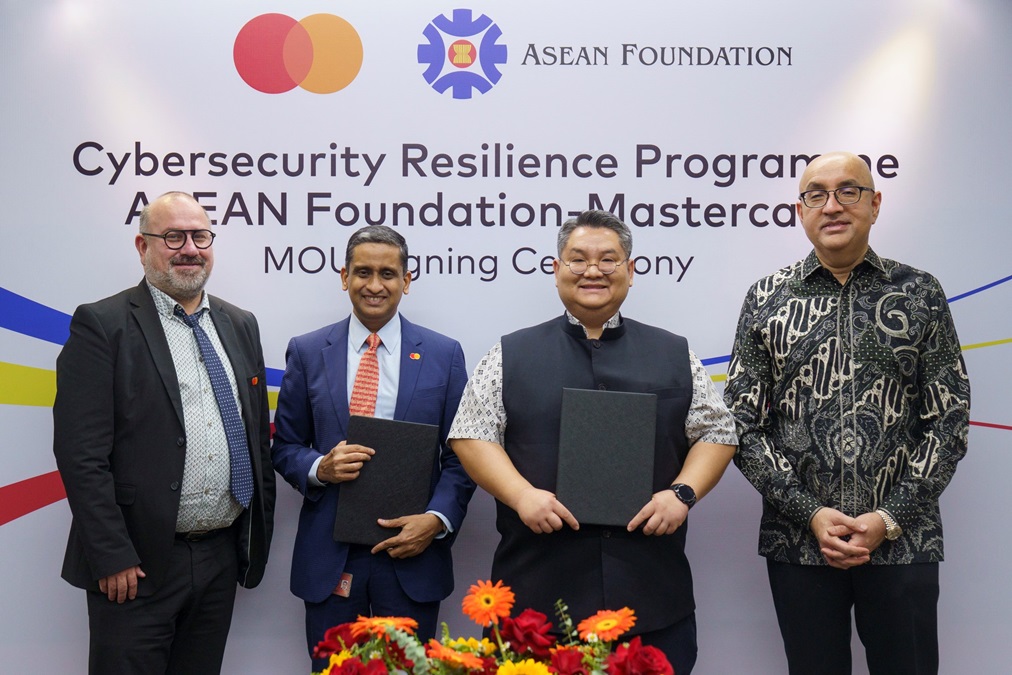
Mastercard recently signed a Memorandum of Understanding (MoU) with the ASEAN Foundation, an intergovernmental organisation within the Association of Southeast Asian Nations (ASEAN), to roll out a range of initiatives across the bloc’s member states to improve the cybersecurity capabilities of public sector entities and small and medium-sized enterprises (SMEs).
As part of this collaboration called the ASEAN Foundation-Mastercard Cybersecurity Resilience Program, the parties will focus on three main pillars: raising awareness, providing skills and training, and improving capacity through technology and intelligence.
From left: Rigo Van den Broeck, executive vice president of Mastecard’s Cybersecurity Solutions; Karthik Ramanathan, senior vice president of Mastercard’s Cyber and Intelligence Solutions, Asia Pacific; Dr Piti Srisangnam, executive director of ASEAN Foundation; and H.E. Satvinder Singh, deputy secretary-general of ASEAN for ASEAN Economic Community. | Photo by Mastercard / NHA File Photo
This collaboration is timely as cybersecurity was featured prominently in Malaysia’s recent Budget 2025 as an area of strategic focus. The government has allocated an additional RM30 million in Budget 2025 to roll out measures to strengthen cybersecurity and digital skills. These measures reflect a comprehensive approach to safeguarding Malaysia’s digital infrastructure and equipping its workforce with essential cybersecurity skills, mirroring the objectives of the ASEAN Foundation-Mastercard Cybersecurity Resilience Program.
This collaboration will therefore complement Malaysia’s national efforts by delivering targeted training and resources to bolster the cybersecurity resilience of SMEs and public sector organizations within the country.
In the private sector, the programme’s initiatives will be geared towards the region’s SMEs, which account for more than 97 per cent of all businesses in the region and provide 85 per cent of the employment. Initiatives include:
Equipping SMEs to manage cyber incidents via the Mastercard Trust Center, an online self-service portal that provides free education, resources, and tools to support their cybersecurity
Enabling SMEs to identify vulnerabilities in their operations through Mastercard’s My Cyber Risk, a tool that allows businesses to pinpoint, prioritize and act on cybersecurity threats to digital infrastructure.
Keeping SMEs up-to-date about emerging threats and issues through cybersecurity workshops and webinars, as well as industry events on cybersecurity-related
In the public sector, the alliance will drive crucial activities to ensure its preparedness, including:
Running cybersecurity webinars specifically designed for the challenges faced by ASEAN governments, providing expertise on key issues for public sector professionals in cybersecurity-related roles.
Conducting crisis simulation exercises to identify the cyber readiness and resilience of organisational technologies and processes, and to highlight areas where capabilities can be
Developing research reports, providing risk assessment tools for ASEAN governments and fostering public-private dialogues and collaboration to fight fraud.
These initiatives are part of ASEAN’s ongoing efforts to enhance the region’s cybersecurity capabilities, cyber capacity-building, and cybercrime information-sharing for member states.
Satvinder Singh, deputy secretary-general of ASEAN for the ASEAN Economic Community, said, “Achieving ASEAN’s Digital Economy vision will involve enhanced regional integration to enable businesses to operate seamlessly while offering consumers efficient and secure digital services, including e-payments solutions. At the heart of this transformation lies the need to strengthen cyber resilience in the ever-evolving nature of cyber threats, which have become increasingly sophisticated and pervasive.”
He added, “I would also like to commend Mastercard and the ASEAN Foundation for its leadership in spearheading the cybersecurity initiatives. Given the Mastercard’s active role in cross-border payment solutions, which profoundly impact business and social activities globally, your cutting-edge financial and security innovations are indispensable to global and regional cyber resilience and digital trust.”
“The ASEAN Foundation-Mastercard Cybersecurity Resilience Program is a major step forward in strengthening our region’s cybersecurity capabilities. As cyber threats grow more sophisticated, it’s crucial that we help our member states not only build stronger defenses but also enhance their ability to share critical information and collaborate across borders. This programme empowers us to take a united approach, boosting both skills and resources, so we can tackle cyber challenges together. By working closely, we’re not just safeguarding our digital future but ensuring ASEAN remains competitive and resilient in the ever-evolving global cybersecurity landscape,” said Dr Piti Srisangnam, executive director of ASEAN Foundation.
South East Asia has seen rapid expansion in its digital economy, with an annual compounded growth rate of 27 per cent since 2021. While regional investment in cybersecurity has been growing 14 per cent annually since 2021 and is expected to reach US$6.1 billion by 2026, these figures are insufficient to properly tackle the region’s fast-growing cybercrime, which saw an increase of 82 per cent between 2021 and 2022, according to Singapore’s Ministry of Defence. At the same time, SMEs are especially targeted by attackers who exploit weaker security measures in these smaller businesses.
Safdar Khan, Mastercard’s division president for South East Asia, said, “Enhancing cybersecurity capacity and expertise is necessary to navigate today’s rapidly evolving digital threats and build a strong digital economy. This significant collaboration with the ASEAN Foundation to strengthen cybersecurity capabilities throughout Southeast Asia underscores Mastercard’s commitment to bolster trust in the digital world. By delivering impactful initiatives for both public sector and SMEs, this collaboration will contribute towards a secure, resilient digital ecosystem for all participants, enabling countless new opportunities for individuals and businesses, and accelerating inclusive growth in Southeast Asia, including Malaysia.”
Mastercard has been at the forefront of enhancing cybersecurity and fostering digital trust, globally and across Southeast Asia. The company collaborates with various industries, as well as public and private sectors to combat the rise of cybercrime.
In addition, Mastercard has collaborated with various organisations to boost cybersecurity capabilities and talent in South East Asia, such as the joint FlexiMasters program in cybersecurity and digital trust with Singapore’s Nanyang Technological University, and the Indosat-Mastercard Cybersecurity Center of Excellence in Indonesia.
A new study commissioned by the Motion Picture Association (MPA) showed that Filipino consumers who access piracy sites and services are at severe risk of cyber threats such as identity theft and ransomware. The study found Filipinos are up to 33 times more likely to encounter a cyber threat on the most popular piracy sites compared to legal film and TV websites.
Photo for illustration purposes only | Photo by Towfiqu Barbhuiya/Unsplash/NHA File Photo
These findings were presented in a study released on 13 November during an anti-piracy symposium organised by the Intellectual Property Office of the Philippines (IPOPHL), the Alliance for Creativity and Entertainment (ACE), GMA Network, Inc. and Globe Telecom. ACE, the world’s leading antipiracy coalition, is led by the MPA.
The study was authored by Dr. Paul Watters, Honorary Professor of Security Studies and Criminology, Macquarie University in Sydney.
“As the digital landscape grows increasingly complex, the risks to consumers accessing piracy sites – especially younger consumers – have never been more urgent,” Watters said. “Consumers today navigate an online environment fraught with hidden malware and exploitation, often without realising the true danger they face. My research highlights the urgent need for effective action to protect consumers, as every click on a piracy site brings not only legal and ethical implications, but significant threats to users’ safety and security. We owe it to the next generation to build a safe and secure internet, which protects young people from cybercriminals.”
To mitigate the risk of consumer harm posed by piracy sites, the study recommends the enactment of proportionate and transparent site blocking laws that will target piracy sites and services, increased funding for Filipino law enforcement to enhance digital forensics and incident response capabilities, and the development of a national awareness and education campaign.
“IPOPHL’s voluntary site-blocking initiative has emerged as a key tool in the fight against digital piracy,” said IPOPHL Director General Rowel Barba. “While it has only been implemented this year, we’ve already disabled access to nearly 20 sites with the help of the National Telecommunications Commission and internet service providers. Nevertheless, a law will institutionaliSe our site-blocking regime to create more outcomes, unlock the full potential of our creative economy and protect our consumers from the alarming cyber threats of piracy sites. IPOPHL is still hopeful to see a site-blocking law passed soon.”
“The MPA’s experience in almost 60 countries around the world shows that site blocking is one of the most effective tools in our toolbox to combat piracy,” said Karyn Temple, Senior Executive Vice President and Global General Counsel for the MPA. “This is particularly true in jurisdictions like the Philippines, where the most visited sites are run by operators based elsewhere in the world. The enactment of site blocking legislation is the next key step towards protecting Filipino consumers, content creators, and the creative industry in the Philippines and around the world.”
The study also showed that raising consumer awareness and education, particularly with teens and pre-teens, is crucial to mitigating the cyber risks associated with piracy sites in the Philippines.
“The study confirms what we have long feared about online piracy in the Philippines,” said Mr. Joseph T. Francia, First Vice President and Head of International Operations for GMA Network, Inc., an ACE member company. In addition to the negative economic impact to the Filipino entertainment industry, digital piracy has far more serious consequences to the Filipino consumers who are unwittingly exposed to a host of cyberthreats by visiting pirate sites. GMA is committed to continue raising consumer awareness and education on the cyber risks associated with digital piracy.”
“At Globe, we believe in a digital world that is safe and empowering for everyone,” said Yoly Cristiano, Chief Sustainability and Corporate Communications Officer for Globe, an ACE member. “This study underscores the critical need for collaborative action to protect consumers, especially young people, from the hidden dangers of online piracy. We are committed to working with the government and partners like the MPA, ACE and GMA Network to promote responsible digital citizenship and ensure a secure online experience for all Filipinos.”
As the highly anticipated year-end shopping season such as 11.11 Singles’ Day, Black Friday and the holiday season draw near, Palo Alto Networks urges heightened cybersecurity vigilance.
This period sees a surge in online activities and financial transactions — from scouring for the best shopping deals to holiday travel bookings, ticket purchases, and cross-border money transfers for holiday gifts — this holiday shopping season is a prime time for cybercriminals to take advantage of the unsuspecting digital shoppers through phishing scams, fraudulent websites, and payment fraud.
Photo for illustrative purposes only. | Photo by CardMapr / Unsplash / NHA File Photo
“As Malaysia’s retail and e-commerce sector continues to grow, the need for stronger cybersecurity measures has never been more critical,” said Sarene Lee, Country Manager for Palo Alto Networks Malaysia. “The best defence always starts with awareness and preparation. Retailers and businesses must take proactive steps to secure their platforms, while consumers need to stay vigilant to ensure a safe online experience.”
As online transactions surge, consumers face growing risks from threats like APK attacks — malicious software targeting mobile apps—and deepfake scams. To stay safe, consumers need to be on guard about their online security, especially during peak holiday seasons.
Palo Alto Networks offers the following best practices to ensure a safe experience:
Verify Authenticity: Double-check emails and offers before clicking on any links. Look out for misspellings, unusual domains, and suspicious attachments.
Use Two-Factor Authentication (2FA): Enable 2FA for all accounts, especially when shopping online, to provide an extra layer of security.
Shop Through Official Channels: Avoid unofficial or unknown websites. Stick to trusted and secure online shopping platforms.
Beware of Phishing Scams: Be cautious of deals that seem too good to be true and fake order confirmation emails.
Strengthen Passwords: Use strong, unique passwords for all online accounts and consider using a password manager for added security.
Avoid Sharing Personal Information: Never provide sensitive personal details like social security numbers or banking information in response to unsolicited requests.
At the same time, businesses must strengthen their defences against cyber threats. Unit 42 by Palo Alto Networks revealed that the retail industry is among the top three in Malaysia affected by ransomware, highlighting the challenge of maintaining security without disrupting the shopping experience.
Common threats during peak periods include social engineering tactics like phishing scams, which trick employees into sharing sensitive information, and ransomware attacks, which can lock down critical systems until a ransom is paid. Additionally, Distributed Denial of Service (DDoS) attacks can overwhelm retail websites with traffic, causing potential downtime and disrupting the customer experience.
To effectively mitigate these risks, businesses should adopt a zero-trust approach that emphasizes strict verification for every user and device accessing their networks, ensuring that no implicit trust is given. By integrating comprehensive threat detection, response, and data protection into a zero-trust framework, businesses can enhance visibility, streamline security operations, and enable real-time threat responses. This approach not only safeguards sensitive data but also maintains a seamless user experience, ensuring both protection and convenience for consumers.
“This not only simplifies management and enhances efficiency but also fortifies resilience by applying a zero-trust approach, essential in defending against an expanding attack surface—especially during high-traffic shopping seasons. Ultimately, cybersecurity is a shared responsibility, and by working together, Malaysians can create a safer and more secure online environment for all,” said Lee.
The Jeffrey Cheah Foundation (JCF) today held its Scholarships and Awards Ceremony 2024, awarding RM75 million in scholarships this year.
The foundation, Malaysia’s largest education-focused social enterprise, has disbursed more than RM745 million in scholarships to date, benefitting thousands of deserving students throughout the years.
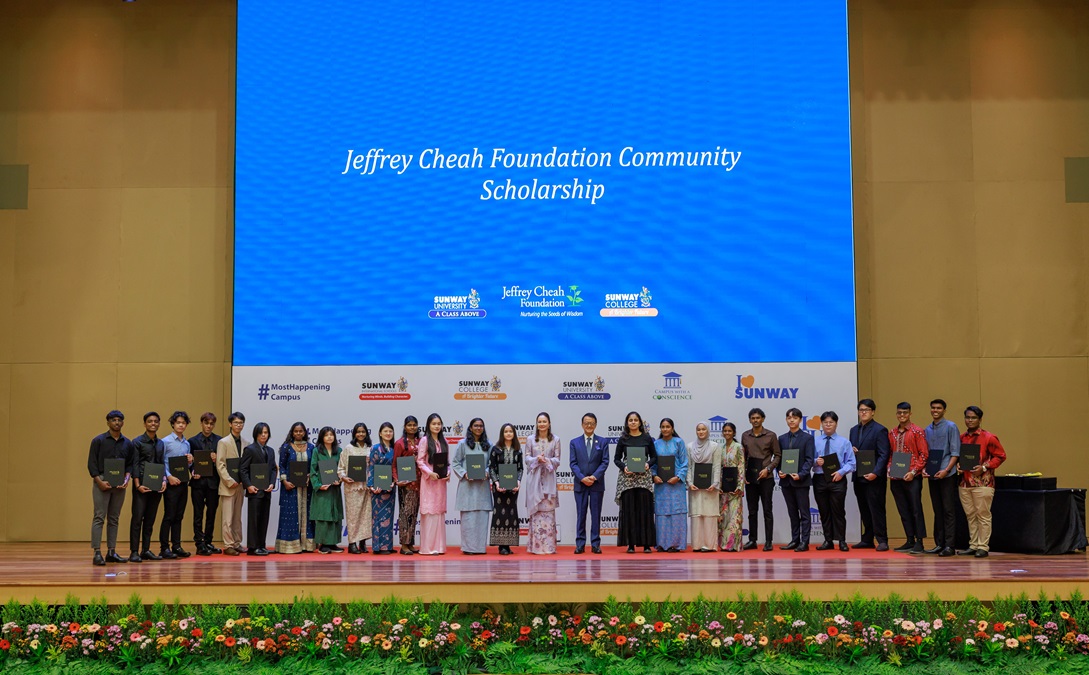
Raja Permaisuri of Perak Darul Ridzuan, Tuanku Zara Salim, and Tan Sri Dato’ Seri Sir Dr Jeffrey Cheah KBE AO, founder and trustee of the Jeffrey Cheah Foundation, alongside recipients on 21 October 2024 at the Jeffrey Cheah Foundation Scholarships & Awards Ceremony 2024. | Photo by Jeffrey Cheah Foundation / NHA File Photo
Her Royal Highness Raja Permaisuri of Perak Darul Ridzuan Tuanku Zara Salim, and Tan Sri Dato’ Seri Sir Dr Jeffrey Cheah KBE AO, founder and trustee of Jeffrey Cheah Foundation, presented the scholarships and congratulated the recipients on their achievement.
The award ceremony saw the presentation of scholarships in various categories, including Sunway University Postgraduate Studentships, Sunway University Postgraduate Scholarships, The Chancellors Scholarship, Sunway Excellence Scholarship, Tun Dr Siti Hasmah Mohd Ali Scholarship for Creative Arts And Music, Jeffrey Cheah Foundation Community Scholarship, as well as Sunway – Victoria University Excellence Scholarship.
Raja Permaisuri of Perak Darul Ridzuan, Tuanku Zara Salim, along with Tan Sri Dato’ Seri Sir Dr Jeffrey Cheah KBE AO, founder and trustee of the Jeffrey Cheah Foundation, and other distinguished guests at the Jeffrey Cheah Foundation Scholarships & Awards Ceremony 2024 held on 21 October 2024. | Photo by Jeffrey Cheah Foundation / NHA File Photo
“The Jeffrey Cheah Foundation’s commitment to nation-building, exemplified by the Foundation’s tagline Nurturing the Seeds of Wisdom, is founded on our belief that making quality education affordable and accessible is crucial in creating a more progressive, sustainable and inclusive future for all Malaysians,” shared Cheah, who is also the founder and chairman of Sunway Group.
As a strong advocate of quality education, world-class research and sustainable development, Cheah’s personal aim is to award several billion Ringgit worth of scholarships in his lifetime.
Cheah also paid tribute to Her Royal Highness Raja Permaisuri of Perak Darul Ridzuan Tuanku Zara Salim’s firm dedication to elevating the Malaysian education system and Tuanku’s promotion of ethical values.
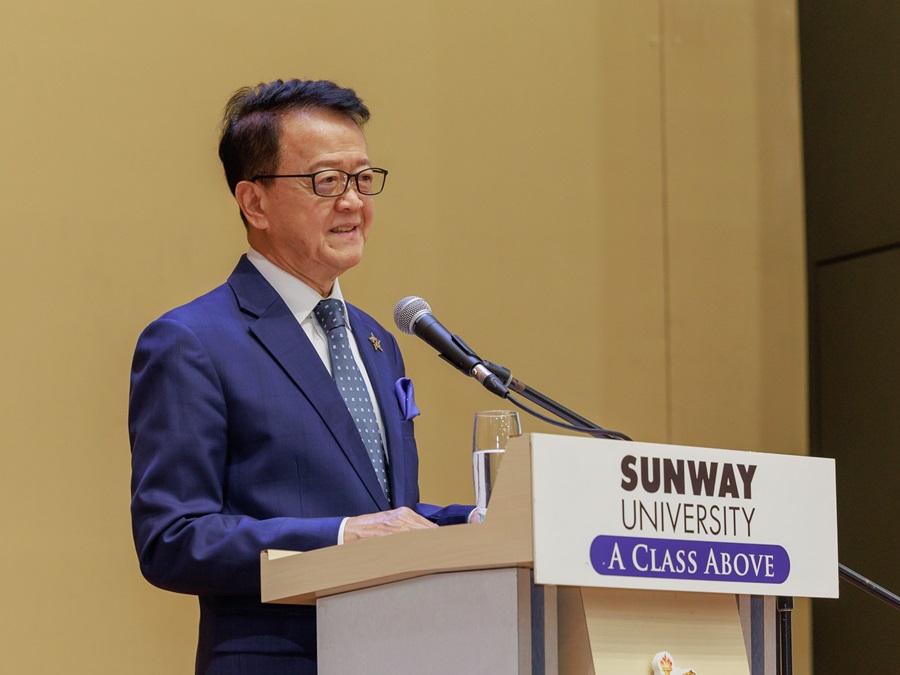
Tan Sri Dato’ Seri Sir Dr. Jeffrey Cheah KBE AO, founder and trustee of the Jeffrey Cheah Foundation, delivers his welcome address at the Jeffrey Cheah Foundation Scholarships & Awards 2024 on 21 October 2024. | Photo by Jeffrey Cheah Foundation / NHA File Photo
As part of JCF’s commitment to nation-building through quality education, a teacher professional development programme was launched to advance Education for Sustainable Development (ESD) in Malaysia, earlier this year.
JCF is funding the development and delivery of a capacity-building development programme on ESD for teachers in national and national-type schools nationwide, as well as the expansion of the programme to 30 more schools, involving more than 2,500 teachers nationwide.
This programme will advance Mission 4.7, a global initiative to advance transformative education for the United Nations Sustainable Development Goals (SDG), which calls upon governments to ensure learners obtain the necessary knowledge, skills, values and attributes to achieve the SDGs.
In line with JCF’s steadfast commitment to advancing the SDGs, the foundation has gifted USD20 million to the United Nations Sustainable Development Solutions Network (UN-SDSN) to establish the Jeffrey Sachs Center on Sustainable Development at Sunway University, as well as UN-SDSN’s Asia Headquarters in Sunway City Kuala Lumpur, which coordinates continent-wide sustainability initiatives alongside the New York and Paris offices.