


Huawei has unveiled its upgraded Xinghe Intelligent Fabric solution at the Huawei Network Summit 2025 (Asia Pacific), underscoring the region’s growing demand for high-performance data centre networks amid rapid digitalisation and artificial intelligence (AI) adoption.
The announcement was made during the session “Xinghe Intelligent Fabric, Powering the AI Era,” where Huawei positioned its solution as a catalyst for digital transformation across industries. The enhanced offering features a three-layer architecture designed to meet the demands of next-generation AI applications: AI Brain, AI Connection, and AI Network Element.
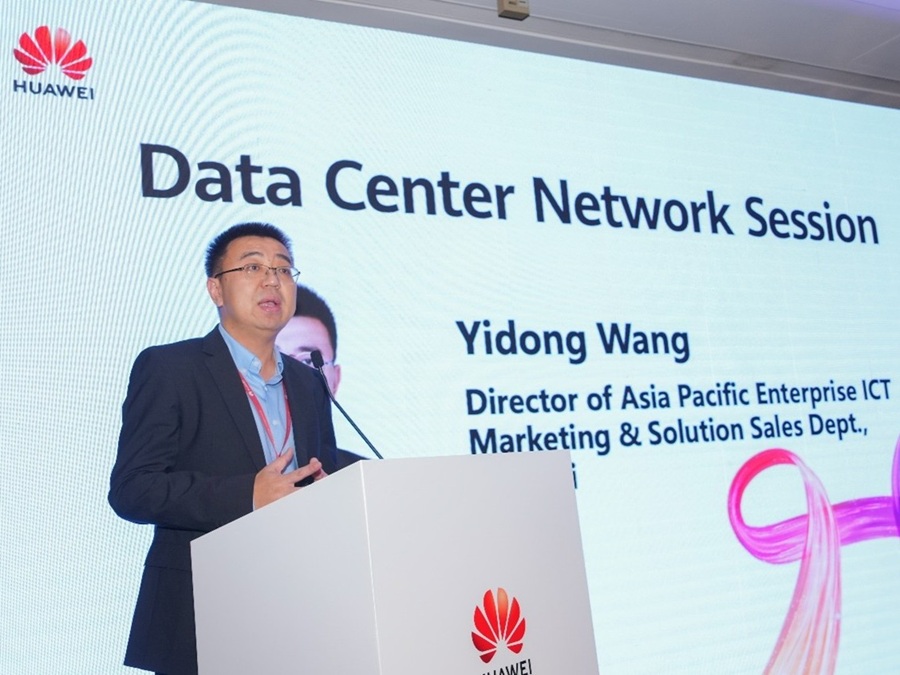
Wang Yidong, director of Huawei’s Asia-Pacific ICT Marketing and Solution Sales Department, highlighted the company’s regional commitment: “Across the Asia-Pacific region, we have deployed cutting-edge data centre network infrastructure for enterprises spanning multiple industries. Our high-performance, ultra-reliable, and highly secure network solutions empower customers to drive business innovation while maximising operational efficiency.”
As AI workloads become increasingly complex and cloud architectures evolve, Huawei’s revamped Xinghe Intelligent Fabric introduces network-wide intelligence for real-time automation and efficiency. According to Arthur Wang, president of Data Center Network Domain at Huawei’s Data Communication Product Line, this innovation comes at a “pivotal transformation point” for data centre networks.
The AI Brain layer incorporates a proprietary network digital map and NetMaster agent to automate network operations and resolve 80 per cent of faults without human intervention, greatly enhancing operational efficiency.
Meanwhile, the AI Connection layer employs Huawei’s unique Network-Scale Load Balancing (NSLB) algorithm to improve data path optimisation and alleviate bottlenecks. This, combined with iReliable technology for fail-proof connectivity, boosts AI training efficiency by over 10 per cent.
The AI Network Element layer, powered by Huawei’s CloudEngine series of data centre switches and StarryLink optical modules, enables high-precision traffic analysis, detects latency issues, and provides intrinsic network security features, including group isolation.

The summit also featured insights from industry partners already deploying the solution. Welcome Chan, IT Security and Network director at Chong Hing Bank, and Adam Lam, solutions architect at Hong Kong Broadband Network, shared case studies that illustrated how the intelligent fabric is being applied in real-world scenarios to elevate business resilience and agility.
Dario Rossi, director at Huawei’s Paris Research Centre, provided a technical outlook on AI-driven data centre evolution, emphasising that algorithms and intelligent orchestration will be central to network development in the AI era.
The Asia-Pacific region, home to some of the world’s fastest-growing digital economies, is expected to benefit significantly from Huawei’s innovations. With sectors ranging from finance to manufacturing now reliant on data-intensive AI systems, the need for scalable and intelligent networks is intensifying.
Huawei’s announcement signals its intent to deepen regional partnerships and accelerate R&D investment. The company stated it will continue working with enterprises and governments across the region to facilitate “intelligent network upgrades and next-generation evolution.”
This strategic focus aligns with broader regional digital economy goals, including smart city initiatives, cloud-first mandates, and efforts to bridge infrastructure gaps in emerging markets such as South East Asia.