


Rare earth elements and critical minerals, long technical topics relegated to mining reports and industrial policy briefings, have rapidly ascended into the realm of geopolitical strategy and global supply-chain security. What world leaders actually said in recent days, juxtaposed with the evolving reality of global supply chains, reveals a broader truth, strategic strength today is defined less by isolated resources and more by resilient partnerships and diversified, long-term supply networks.
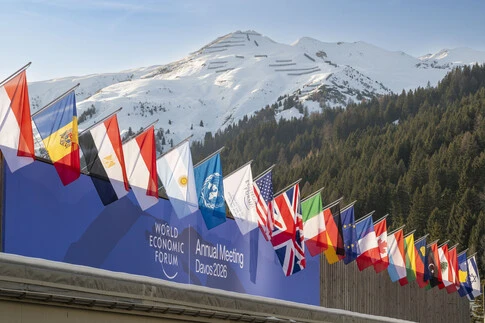
At the World Economic Forum in Davos, global attention was captured not just by grand geopolitical speeches but by the undercurrent of resource competition, supply-chain vulnerability, and the strategic leverage embedded in rare earths. Rare earth elements, crucial for permanent magnets, electric vehicles, advanced electronics, green energy technologies, and defence systems remain scarce in supply chain resilience outside China. China continues to dominate not only extraction but, more importantly, up to 90 % of global processing and refining capacity, creating a structural chokepoint for global industry and national defence alike.
Trump’s Davos remarks and Greenland framing, perhaps no figure this year brought the rare earth narrative into sharp geopolitical relief more than U.S. President Donald Trump. On the sidelines of Davos and in subsequent interviews, Trump repeatedly tied rare earths and critical minerals to deep national interests, though his public framing varied between rhetoric on security and mineral access.
In announcing a so-called framework deal with NATO over Greenland’s rare earth metals, Donald Trump, President of the United States stated “They will participate in the rights to the minerals, just as we do.” In the same interview Trump stressed the strategic context, declaring that “everyone talks about minerals,” and attempting to recast rare earths as part of broader security considerations “There are many of them. There is no such thing as rare earths. There is ‘rare processing’… This is not the reason we need this. We need it for strategic national and international security.” Understanding the context still needs a few days to digest as this moving target continues to move.
Separately, at the Davos podium, Trump declared he is seeking “immediate negotiations” to pursue U.S. interests in Greenland — explicitly stating that force was off the table while affirming that the United States is well-placed to secure Greenland’s security and, by implication, its resource potential.
Trump’s emphasis on rare earths, while at times rhetorically defensive underscores a broader geopolitical shift, rare earths are now recognized as strategic leverage points in global competition. But the reality on the ground is that even substantial raw resource endowments such as Greenland’s, estimated to rank among the world’s top rare earth reserves cannot be rapidly converted into secure supply without years of investment, infrastructure build-out and regulatory evolution.
This disconnect between strategic intent and supply chain reality illustrates a central paradox of modern resource geopolitics: the world can pivot overnight in rhetoric, but supply chains take nearly a decade to build. That’s why partnerships, not isolated grabs are becoming the operative strategy for major powers. Easier and faster to market options are required.
China’s dominance in rare earth processing reinforces why Western nations are scrambling to diversify supply chains. What makes rare earths strategically compelling isn’t merely their role as raw commodities, but what they enable: the permanent magnets at the heart of electric motors, the high-performance alloys in jet engines and the sensors in guided systems.
The dialogue at Davos and elsewhere reflects a world waking up to the realities of critical minerals, distribution is uneven, processing is concentrated, and supply chains are brittle. Leaders now speak of redundancy over single points of failure, and of partnerships over dependence. But even as geopolitical winds shift, building a resilient global rare earth supply chain will require sustained investment, regulatory clarity, and international cooperation over years.
For more analysis and news from Rare Earth Review