

 Rare Earth Investment Opportunities in 2026
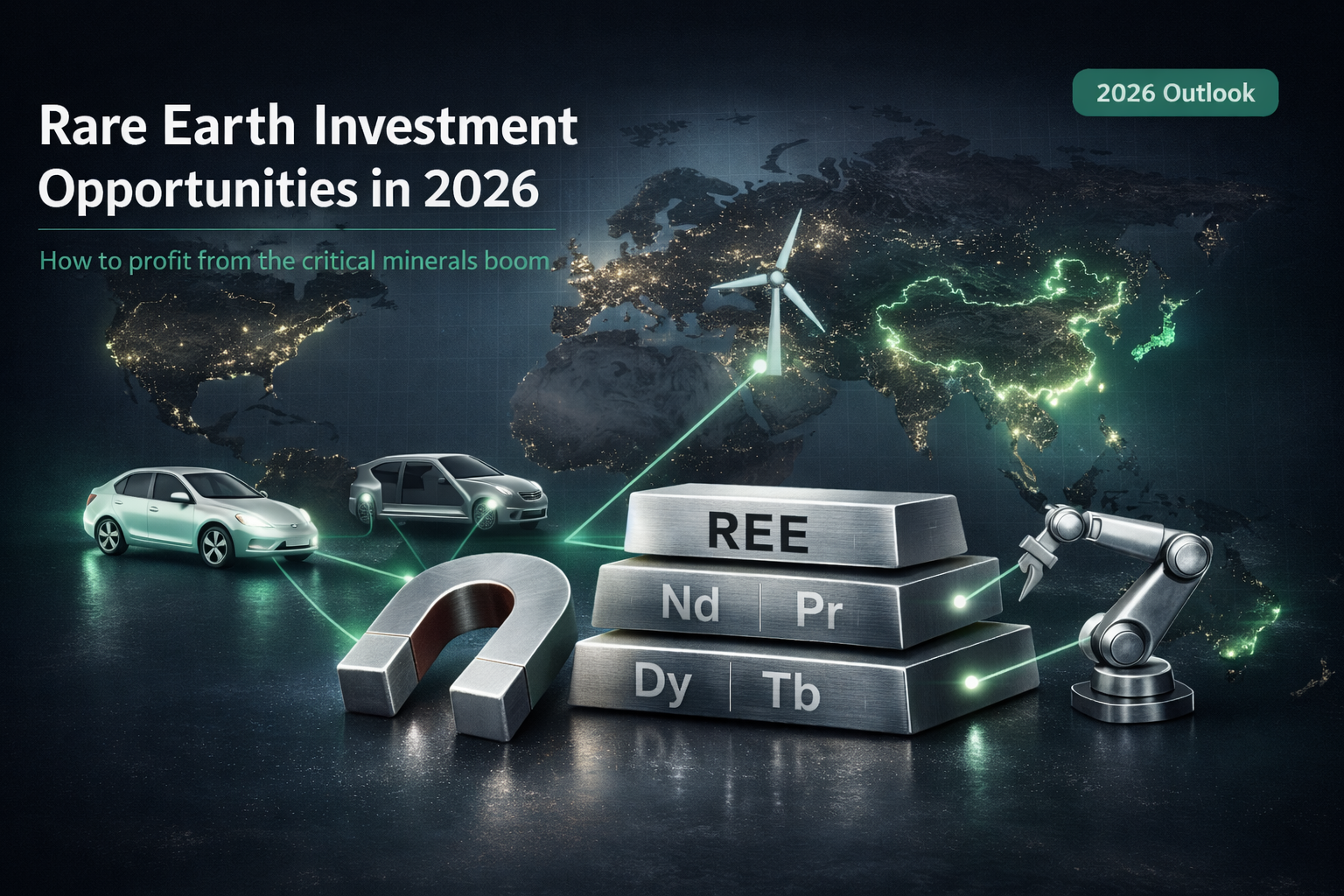

Rare earth elements offer powerful investment opportunities in 2026 as demand from EVs, wind energy, AI, and defense keeps rising while supply chains remain fragile. These critical minerals sit at the intersection of clean energy, geopolitics, and technology, making them a high‑conviction theme for forward‑looking investors.
Why Rare Earths Are Critical Now
Rare earths are a group of 17 metals used in high‑performance magnets that power electric vehicles, wind turbines, advanced robotics, smartphones, and modern military systems. Governments classify many of these elements as critical materials because they are essential to the economy and national security yet face elevated supply risks.
Global demand for rare earth magnets is valued around 19 billion dollars, with growth expected to continue strongly through 2036, driven by electrification and automation trends. This long‑term demand story underpins interest in miners, refiners, recyclers, and magnet manufacturers across major markets.
2026 Market Drivers And Themes
Several themes define the rare earth opportunity set this year. Trade tensions and export controls have turned rare earths into a strategic tool in the broader competition over clean‑energy and defense supply chains. At the same time, policy in the US, EU, and Asia is shifting toward building domestic “mine‑to‑magnet” capacity and incentivizing recycling to reduce dependence on Chinese processing.
EV adoption, AI‑driven data centres, and industrial automation all increase demand for high‑performance magnets that rely on neodymium, praseodymium, dysprosium, and terbium. Analysts expect rare earth exploration budgets to keep rising, with capital concentrated in countries like Australia, Brazil, the US, and Canada.
Where The Opportunities Are
Investors can gain exposure to rare earths through several angles, each with different risk‑reward profiles.
Upstream mining companies with large, economically viable rare earth deposits in politically stable jurisdictions.
Midstream processors and refiners that focus on separation, oxide production, and alloy manufacturing, helping to close Western processing gaps.
Downstream magnet manufacturers positioned to supply EV, wind, robotics, and defense OEMs as demand for permanent magnets scales.
Recycling and circular‑economy players recovering rare earths from end‑of‑life magnets, electronics, and industrial waste streams.
North America is expected to be one of the fastest‑growing rare earth markets thanks to EV adoption and policy support aimed at cutting dependence on Chinese supply. Similar initiatives in Europe and parts of Asia support a multi‑regional build‑out of critical‑mineral supply chains.
Geopolitics, Risk, And Long‑Term Potential
The rare earth sector remains volatile because a small number of countries dominate mining and processing, and policy changes can quickly disrupt supply. Export controls, environmental regulations, and community opposition to new mines can all affect project timelines and pricing.
Despite these risks, rare earths are expected to stay central to clean energy, digital infrastructure, and defense strategies worldwide, supporting a durable long‑term growth thesis. For investors, building diversified exposure across the rare earth value chain and regions can help capture upside while managing concentration risk in this strategically important sector.