


China’s engagement with Southeast Asia on rare earths is not about replicating its domestic model abroad. It is about integration securing raw materials where available, supporting selective processing where politically and economically aligned, and anchoring the most sophisticated stages of the supply chain at home.
Malaysia, Vietnam, Myanmar, Thailand and Singapore each play distinct roles in this architecture. Together, they form a regional ecosystem that reinforces China’s central position in the global rare-earth supply chain — not through domination, but through deep, carefully managed interdependence.
If the past decade was about building capacity, the next will be about locking in partnerships. And in Southeast Asia, China has already chosen its most important counterparts.
In April 2025, Chinese President Xi Jinping signalled Beijing’s openness to technical and technological cooperation in rare-earth processing during a state visit to Kuala Lumpur, indicating China’s readiness to assist Malaysia in building processing capacity.
China’s strategy within Malaysia could involve deploying state-linked firms to co-develop refineries and processing facilities, transferring technical know-how that remains tightly guarded within China’s own domestic supply chain. This aligns with broader Chinese policy: exporting capital, engineering services and midstream capability while retaining a technological edge at home.
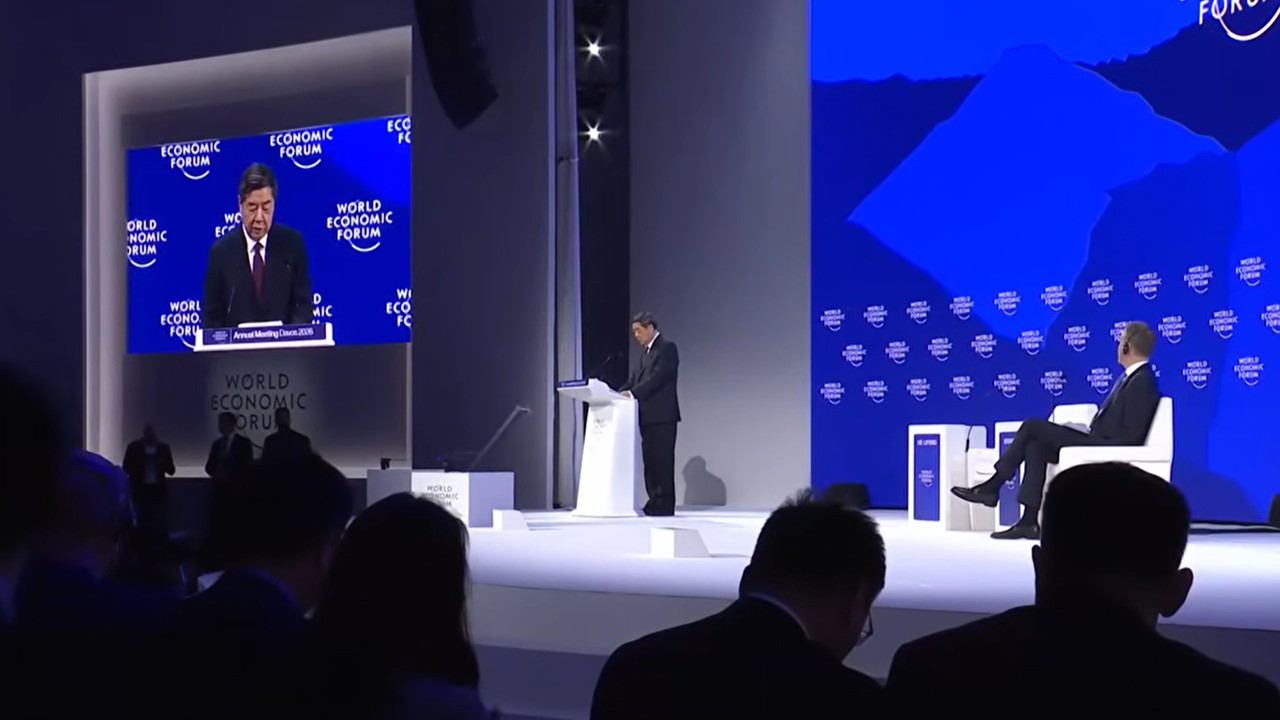
At forums such as the World Economic Forum in Davos 2026, Chinese officials including Vice-Premier He Lifeng articulated a broader narrative of openness and mutual cooperation in trade, even as tensions over supply chains simmer globally. He stressed China’s willingness to accept foreign business and expand imports, framing Beijing as a reliable partner in global trade despite rising geopolitical pressure.
At the World Economic Forum in Davos, Chinese officials did not explicitly announce new rare-earth partnerships, but their messaging was consistent with Beijing’s broader strategy. Vice-Premier He Lifeng emphasised China’s commitment to openness, trade stability and expanded imports language that aligns with securing long-term supply relationships rather than pursuing resource nationalism.
The absence of overt rare-earth rhetoric was itself telling. China’s advantage lies not in public signalling, but in the depth and maturity of its existing supply chains and in its ability to quietly extend those chains through regional partnerships.
Malaysia: From Resource Holder to Processing Partner
Malaysia has emerged as one of the most strategically significant rare-earth partners for China in Southeast Asia. The country holds substantial rare-earth deposits and, crucially, has signalled its intent to move beyond raw material extraction toward midstream and downstream development. This aligns closely with China’s own interests: securing diversified processing capacity while maintaining technological leadership.
Beijing is likely to support Malaysia with processing expertise, engineering services and capital investment, while stopping short of transferring the most sensitive intellectual property that underpins China’s domestic refining dominance. In practice, Malaysia could become a complementary processing node within a China-centred supply chain rather than a fully independent competitor.
Vietnam: Securing Raw Materials, Building Future Optionality
Vietnam possesses some of the world’s largest rare-earth reserves, yet production remains limited and processing capacity underdeveloped. For China, Vietnam represents both an immediate upstream opportunity and a longer-term strategic hedge. In the near term, securing access to Vietnamese ores helps diversify supply. Over time, selective processing or joint-venture development could follow.
China’s approach here is likely to be cautious and incremental, reflecting Vietnam’s desire to avoid over-dependence on any single partner. Rather than exporting full processing capability, Beijing is expected to integrate Vietnamese supply into existing Chinese refining systems while retaining flexibility for future cooperation.
Myanmar: Critical Upstream Supply Under Complex Conditions
Myanmar already plays a pivotal role in China’s rare-earth supply chain, particularly for heavy rare earth elements essential for high-performance magnets and defence technologies. The majority of Myanmar’s output flows directly into China for processing, reflecting Myanmar’s lack of domestic refining capacity and China’s tight control of midstream operations.
Despite political instability, China is expected to maintain — and where possible stabilise — this upstream supply corridor. Myanmar’s role is unlikely to evolve toward downstream development in the near term; instead, it will remain a critical source of feedstock underpinning China’s domestic industrial base.
Thailand: Strategic Balancer and Manufacturing Connector
Thailand occupies a different position in China’s rare-earth strategy. It is not a major resource holder, but it is a key manufacturing hub deeply integrated into regional and Chinese supply chains. Beijing’s interest lies less in mining and more in linking rare-earth inputs to Thailand’s advanced manufacturing ecosystem.
China is likely to prioritise cooperation in processing know-how, industrial applications and joint research rather than large-scale extraction projects. Thailand’s careful diplomatic balancing — engaging both Western and Chinese partners — makes it an ideal platform for low-visibility but high-impact supply-chain integration.
Singapore: Trade, Finance and Rare-Earth R&D
Singapore may lack mineral resources, but it plays an outsized role in China’s regional strategy as a financial, trade and research hub. Chinese firms increasingly use Singapore as a base for downstream innovation, supply-chain financing, and advanced materials research — including recycling and circular-economy technologies tied to rare earths.
Rather than hosting extraction or processing, Singapore functions as the connective tissue linking Southeast Asian supply with global markets and innovation ecosystems. This role complements China’s domestic strengths while reducing exposure to geopolitical friction elsewhere.
Read more about Rare Earths here