


Advocacy leaders from across Southeast Asia gathered for the first APPISx SEA meeting in Malaysia to explore new ways to improve care for women facing breast cancer, which remains the most common cancer among women in all ten ASEAN countries.
Hosted by the National Cancer Society Malaysia (NCSM) and the Alliance & Partnerships for Patient Innovation and Solutions (APPIS), the two-day event brought together patient leaders from Brunei, Indonesia, Malaysia, Philippines, Singapore, Thailand, and Vietnam to share best practices, discuss challenges, and collaborate on solutions for equity in breast cancer treatment and care across the region.
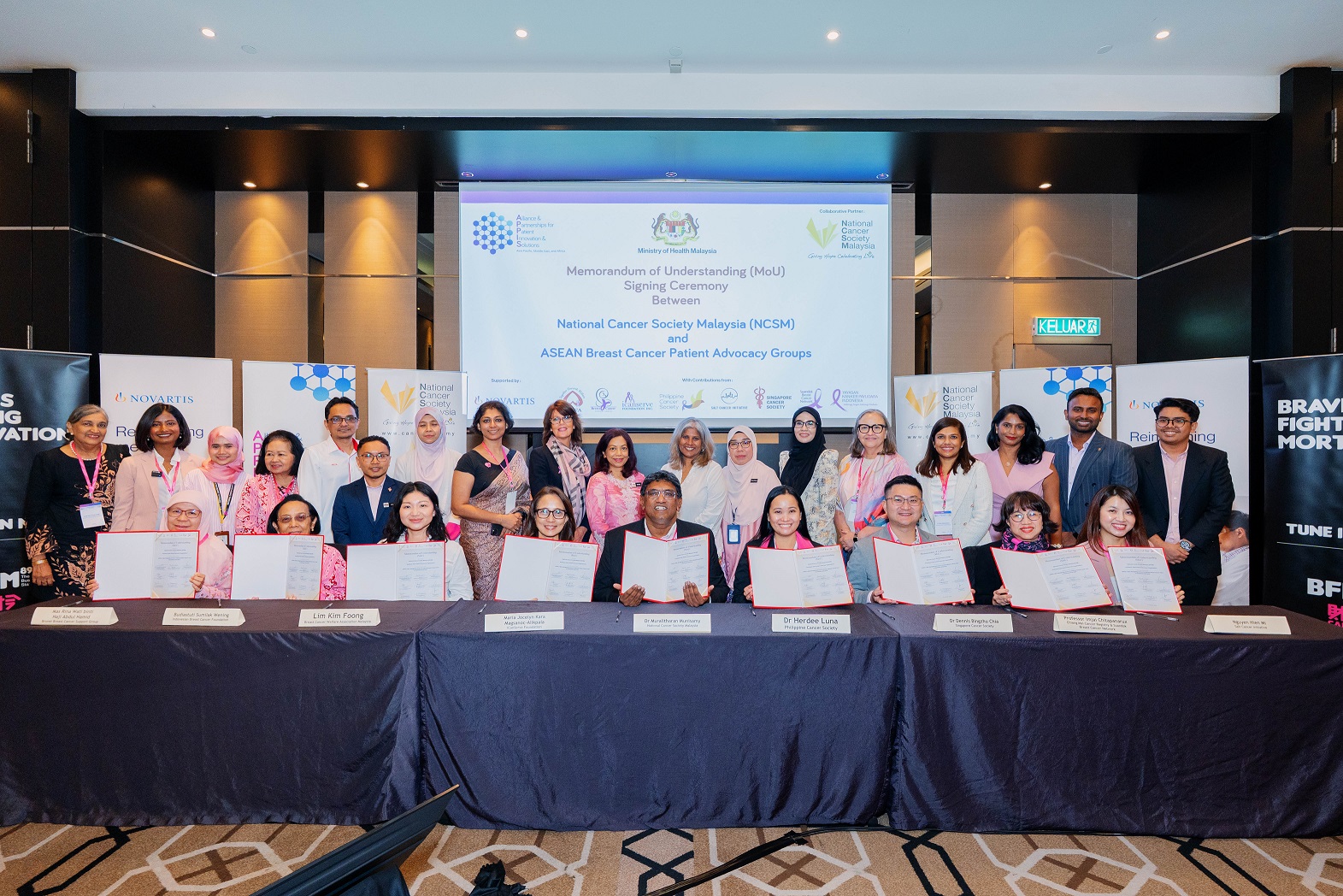
The theme, “Best Practices in Patient Navigation and Innovative Funding Solutions for Equitable Access to Breast Cancer Care in Southeast Asia,” addressed vital issues such as patient support, funding, awareness, and access to treatment, with the signing of a Memorandum of Understanding to underscore participants’ solidarity and common goals.
Participants engaged in workshops, case study presentations, and a roundtable discussion designed to empower leaders to champion better breast cancer care services in their countries.
Guest of Honor, Yang Berbahagia Dato’ Sri Suriani binti Dato’ Ahmad of the Ministry of Health Malaysia, who was on hand to launch the Ministry’s National level Pink October celebrations and witness the MOU said “Breast cancer remains a significant health challenge in Malaysia, with over 5,000 new cases and more than 1,600 lives lost each year. This issue is not unique to us—it echoes across Southeast Asia, where access to timely diagnosis, treatment, and support remains uneven.
The APPISx SEA platform, powered by Novartis and championed by NCSM, is a groundbreaking step toward uniting patient leaders and advocates across the region. By fostering collaboration and innovation, we are paving the way for women to access better care, earlier screenings, and a brighter future. Together, we are stronger in the fight against breast cancer.”
Kol.Bersekutu (PA) Assoc Prof Dr. Murallitharan Munisamy, Managing Director of NCSM, highlighted the regional importance of collaboration “Hearing from patients and advocacy champions across Southeast Asia helps us to better understand the unique challenges faced by each country. By working together through events like APPISx SEA, we can improve the standard of breast cancer care and provide meaningful and holistic support to patients in need.”
Breast cancer remains the most common cancer among women in Malaysia and across Southeast Asia. Despite advances in awareness and screening, it continues to claim thousands of lives each year, with approximately 300,000 new breast cancer cases and nearly 140,000 deaths recorded in 2020.
The high mortality rate is particularly evident in Philippines, Malaysia, Singapore, Vietnam and Indonesia which saw the highest cancer mortality from breast cancer in 2022.[ii] In Malaysia alone, 1,681 women died from breast cancer in 2024, reinforcing the urgent need for better care.
Judith Love, President of Asia Pacific, Middle East, and Africa at Novartis, underscored the call for action “Too many families in Southeast Asia know the pain of losing a mother, a daughter and friends to breast cancer – yet, significant gaps in awareness, access, and support remain. As one of the largest threats to women’s health, we must do more to ensure patients receive the care they need, and are enabled to live well and longer.
At Novartis, we believe that reimagining progress in healthcare delivery begins with collaboration. Through platforms like APPIS, we can empower patient advocacy leaders with the knowledge, access, networks and tools needed to drive change in their communities.”