

In an era defined by volatility, thought leadership is no longer a soft power accessory, it is a critical success factor, a starting point for what is needed at the end of a crisis. This is where STRATCOM 2026 enters the equation. Now in its latest edition, STRATCOM has taken another step up, it has evolved into a global convening platform of influence, bringing together voices from Türkiye and beyond.
Front of mind today is the escalating confrontation between the United States and Iran. A conflict that is no longer confined to kinetic exchanges but has expanded into economic, informational and psychological domains. The critical questions are no longer limited to what has happened, but extend to what will happen next, but perhaps more importantly, how peace can be accelerated rather than deferred.
Geography, as always, is destiny. Türkiye understands this better than most. Its stewardship of the Bosporus Strait and Dardanelles has, for centuries, positioned it as a gatekeeper of global trade and military passage. This historical familiarity with chokepoints offers a unique lens through which to understand the rising strategic significance of the Strait of Hormuz. A perspective that affords Türkiye a unique position borne from history and a generational lived experience by its people and leadership.
The Strait of Hormuz, once a technical term reserved for energy analysts and cartographers, has now entered mainstream geopolitical consciousness. It underpins the industrial lifeblood of modern economies, from hydrocarbons to emerging sectors such as hydrogen and aluminium production. The question that must be asked is both simple and uncomfortable: was Iran’s ability to leverage this chokepoint always part of a long-term strategic calculus, or has it evolved opportunistically amid crisis?
Recent developments suggest a more complex reality. Reports of selective safe passage arrangements imply that while missiles fly, negotiations continue in parallel. In effect, Iran is positioning itself not merely as a participant in conflict, but as a potential guarantor of stability within a defined framework. This represents a profound shift. Traditionally, such roles were reserved for global powers like the United States, the United Kingdom, France, China and Russia. Today, that assumption is being tested in real time.
From a crisis communications perspective, the game has fundamentally changed. Control is no longer derived solely from military superiority, but from the ability to shape perception, influence access, and define the terms of engagement, both physical and narrative.
Looking ahead, the implications are far-reaching. This is not a contained crisis. It is a signal event. The established global order is under strain, and with reconstruction opportunities on the horizon, questions will inevitably arise around the durability of sanctions regimes and the willingness of states and corporations to adhere to them. Where capital flows, alignment often follows.
We are, quite literally, caught between a rock and a hard place, or to borrow a now familiar phrase, in dire straits by the name of Hormuz.
The lessons from this conflict will cast a long shadow. Yet amidst the uncertainty, platforms like STRATCOM play a critical role. They provide the convening power necessary to bring together those capable of interpreting not just what has happened, but what it means and what comes next.
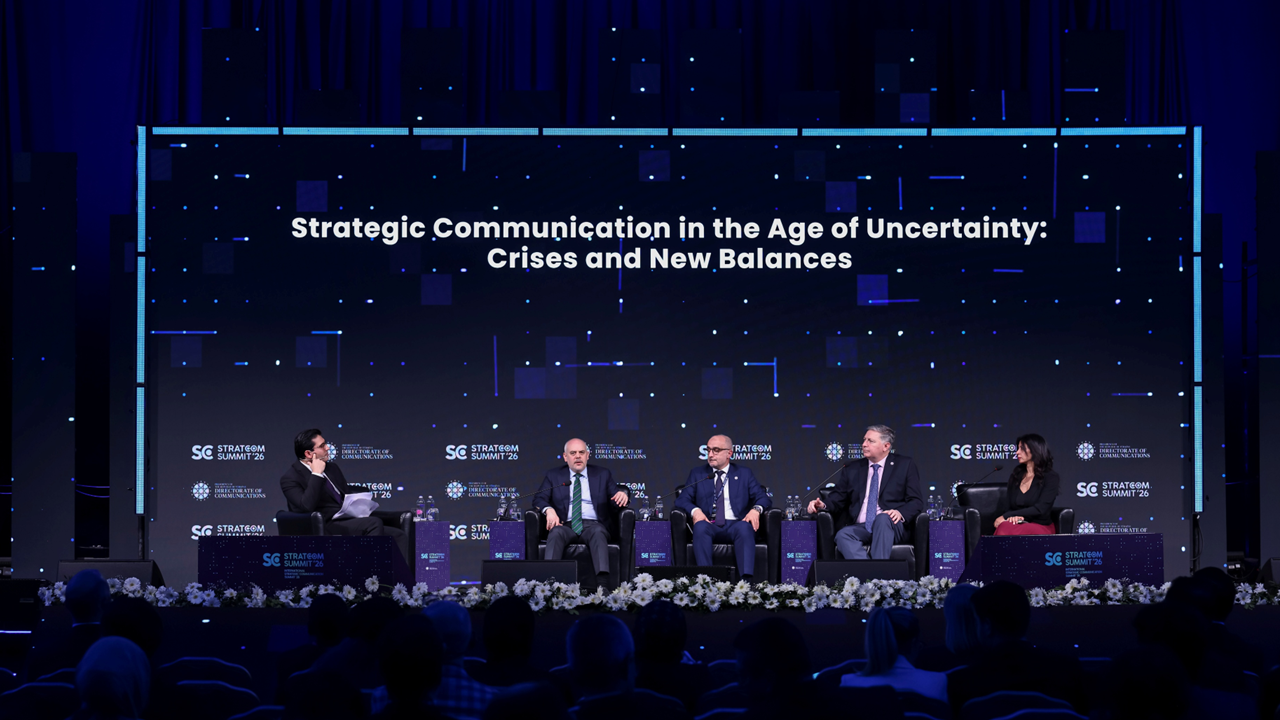
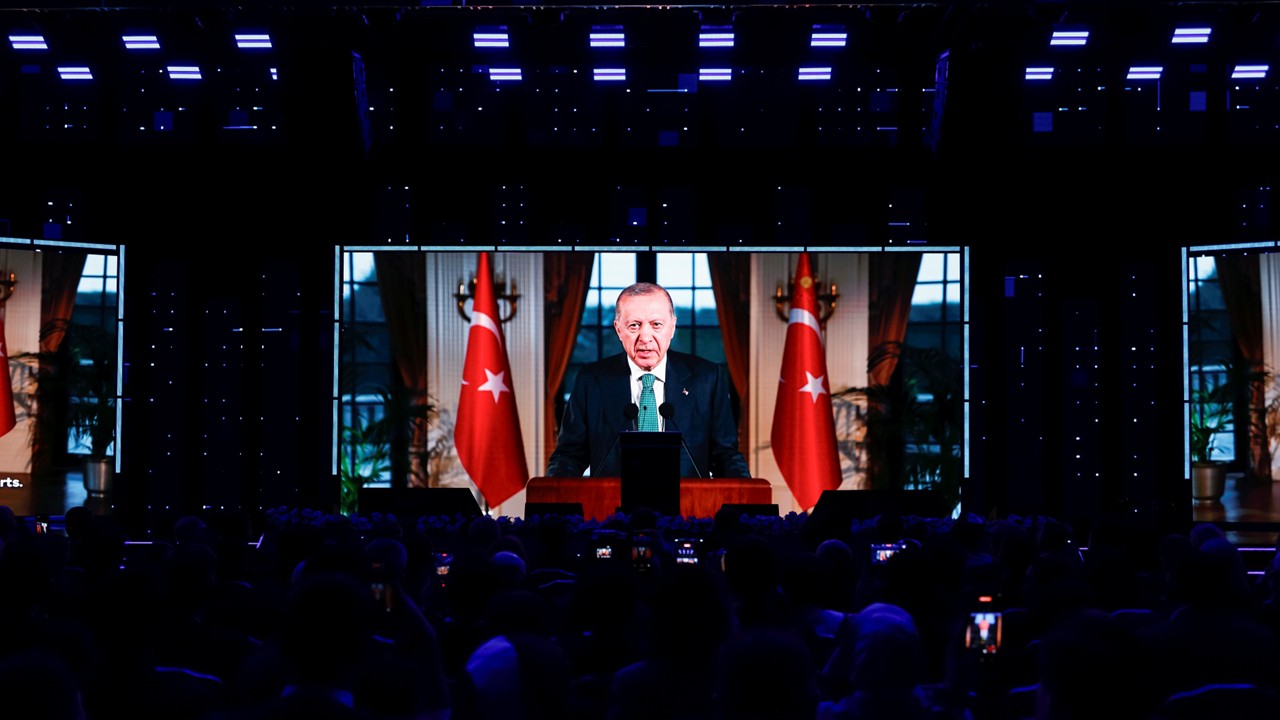
The hosts, Türkiye has brought some of their big names to the table, His Excellency Hakan Fidan, the Minister of Foreign Affairs of the Republic of Türkiye, explained the broader geopolitical realities, while Prof. İbrahim Kalın, Director of the National Intelligence Organization brought a dimension that was both security driven but based on the human need to understand through stories. Perhaps the most telling was as his explanation covered higher level concerns and the realities of on-ground challenges to controlling the “Narrative” while protecting the population. His Excellency Recep Tayyip Erdoğan, President of the Republic of Türkiye set the stage with a video address delivered in the opening session. The message is clear, communications, strategic communications is a critical realm of conflict, Türkiye has signalled that it will look to control and contest, if necessary, the “Narrative” battlespace.
For crisis communicators, the rules remain unchanged even as the terrain evolves. At the centre of every crisis lies a single, defining question: how will communication shape the narrative? And in this context, narrative is not spin. It is the articulation of a sustainable future, one that stakeholders can understand, engage with and ultimately support.
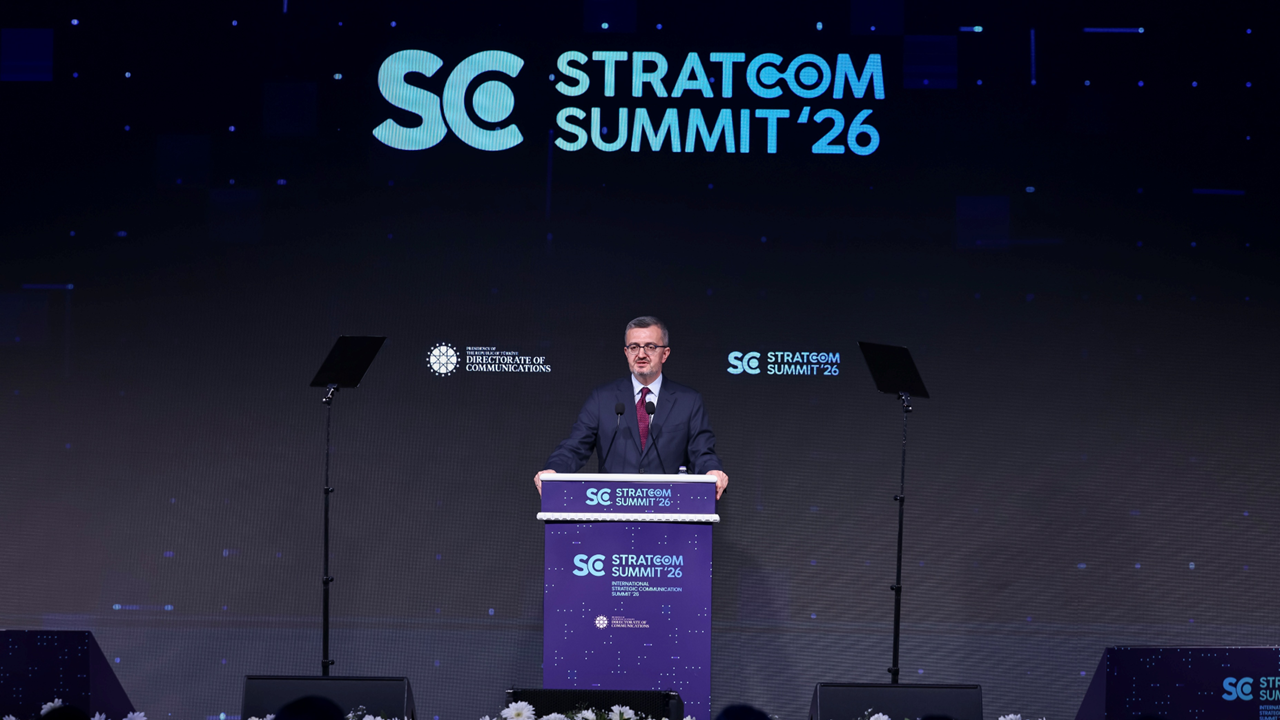
Recognition must be given to His Excellency Professor Burhanettin Duran, Head of the Directorate of Communications of the Republic of Türkiye, whose leadership together with the dedication of the team have truly elevated STRATCOM into a global platform for dialogue, insight and strategic foresight. The next edition will require more space or perhaps extended over more days, we will wait to see what the next edition holds.
Moving forward, as the critical item on the agenda has not been resolved, the most difficult phase still lies ahead: the design of a graceful exit. At the time of writing, both sides continue to exchange strikes on critical infrastructure. The pathway to de-escalation will require not just diplomacy, but disciplined communication, signals that can be trusted, interpreted and acted upon.
There are opportunities in every crisis, some large, many small. But there are also risks, amplified by distraction. While global attention is fixed on the macro conflict, threat actors operate in the periphery. Leaders must now articulate, with clarity and conviction, why they are positioned to navigate this environment, whether to customers, supply-chain partners, or voters. Every cloud may have a silver lining, but in moments such as these, optimism must be matched with realism. Plans, however well-constructed, are ultimately tested under pressure. This era will be defined not just by disruption, but by a convergence of ideas.
The game is underway. The clock is ticking. This is the new era of perpetual crisis, those who can think, communicate and act with clarity will define not just outcomes but the future itself.
Nordin Abdullah
Founder
Crisis Management Centre – Malaysia