


New Year’s Weight Loss Resolutions: Train Better by Managing Pain and Recovery
As the New Year begins, weight loss returns to the top of many people’s resolution lists across Asia. Gyms see a spike in sign-ups, step counters come out of drawers, and meal plans start trending again. But by February, the same pattern repeats for many. A sore lower back flares up. Knees feel cranky after a few weeks of jogging. Shoulders tighten after a new strength routine. The motivation is still there, but the body starts pushing back.

Health professionals say this is one of the most overlooked reasons resolutions fail. It is not always discipline. Sometimes, it is movement quality and recovery. When training hurts, consistency becomes difficult. And when consistency breaks, results slow down fast.
In Kuala Lumpur, chiropractor Dr Ian Yeoh of Ian The Chiro says he sees the same story every year. People start strong, then push through restrictions and tightness that have been building for years.
“A lot of people come in feeling frustrated because they genuinely want to get healthier, but their body keeps getting in the way,” he says. “They try to train like they did before, but the joints do not move well, the muscles are tight, and they end up compensating. That is when flare-ups and small injuries happen.”
The missing piece: staying consistent without breaking down
Weight loss is often framed around calories, discipline, and willpower. Those matter. But for many beginners and busy professionals, the real challenge is staying active long enough for the plan to work. That depends heavily on whether the body can handle training load.
A common scenario looks like this:
- Someone returns to exercise after months or years.
- They start with walking, jogging, classes, or strength training.
- Old issues appear, like stiff hips, tight calves, a sensitive lower back, or neck tension.
- Form gets sloppy, compensation kicks in, and discomfort increases.
- They stop, rest, and the cycle resets.
Dr Ian says the goal is not to chase a perfect routine. It is to remove barriers that make training feel miserable.
“If you can help someone move better and recover better, they train more consistently,” he explains. “And consistency is everything.”
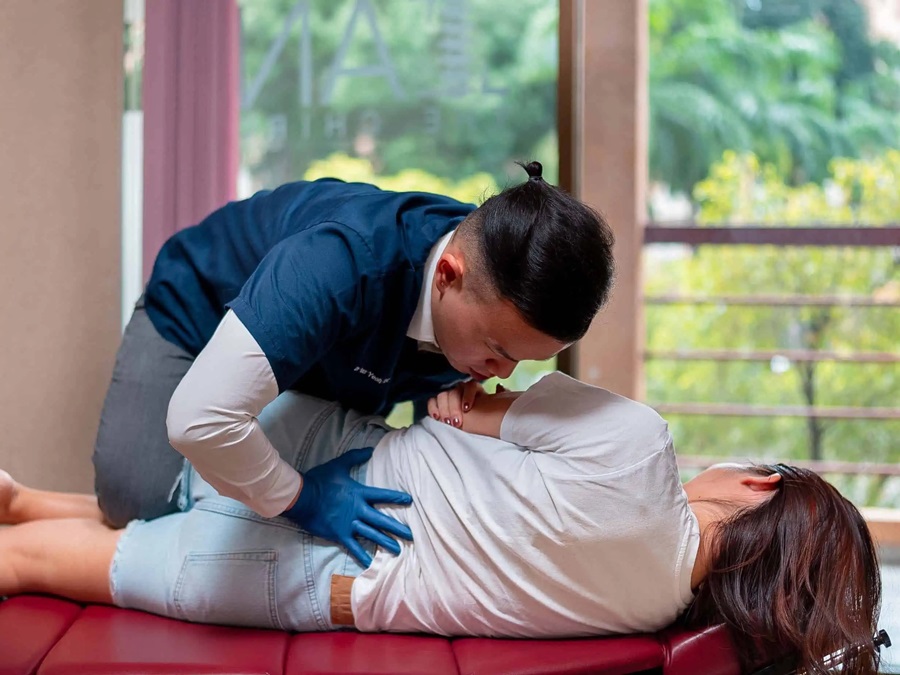
Why chiropractic and dry needling show up in fitness conversations
Chiropractic care is commonly associated with back and neck pain, but many clinics now see active patients using it to support training, mobility, and recovery. Dr Ian describes chiropractic as a way to restore joint motion and reduce mechanical stress that builds up from desk work, repetitive activity, or previous injuries.
“When the spine and joints move the way they should, workouts tend to feel smoother, and people feel less ‘stuck’,” he says. “That makes it easier to keep showing up.”
Dry needling is another tool that is increasingly discussed in sports and fitness circles, especially for people who struggle with stubborn muscle tightness. The technique targets tight muscle bands and trigger points that can restrict movement, affect form, and contribute to pain.
“Tight muscles do not just hurt. They can change how you move,” Dr Ian says. “If your hips, calves, or lower back are constantly tight, your body compensates. That can increase fatigue and raise injury risk.”
In practice, some clinics combine both approaches: chiropractic care to address joint movement restrictions, and dry needling to reduce muscular guarding and tension that may limit range of motion. The aim is not to make weight loss happen directly, but to help people exercise with less friction.
It is not a shortcut, and it is not magic
Both chiropractic care and dry needling are often misunderstood as quick fixes. Dr Ian is clear that they are not weight-loss tools by themselves.
“There is no adjustment or needle that replaces good nutrition and regular exercise,” he says. “What we do is support the body so people can actually follow through with the plan.”
That distinction matters, especially when people are searching for the fastest path to a result. Many New Year programmes fail because they are too aggressive, too early. Motivation might feel like it is at a 10 out of 10, but tissues may not be conditioned yet.
“Your mind thinks you are 18. Your body might be operating like it has been sitting at a desk for 10 years,” Dr Ian says. “If you overload too quickly, you get flare-ups. The better strategy is to build tolerance and remove limitations step by step.”
A smarter New Year plan: build a body that can keep training
For people trying to lose weight, the most practical question may be: can you sustain activity long enough for it to work?
That means paying attention to the basics:
- Start with a training volume you can recover from.
- Focus on walking, strength basics, and mobility, not high-intensity punishment routines.
- Fix the common bottlenecks, like stiff hips, limited thoracic rotation, and ankle or calf tightness.
- Prioritise sleep and recovery, because fatigue changes movement quality.
- Get help early if pain keeps returning.
Dr Ian says many people wait too long. They push through pain until it becomes a bigger issue, then take weeks off, then restart from zero.
“If something keeps flaring up, it usually means there is a movement problem, a load problem, or both,” he explains. “Address it early, and it is much easier to stay consistent.”
As New Year resolutions evolve, more people are shifting toward sustainable approaches that support long-term habit change. For those struggling with pain, stiffness, or recurring tightness, integrating chiropractic care and dry needling into a broader fitness plan may help reduce setbacks and keep training on track.
“Weight loss should not feel like punishment,” Dr Ian says. “When your body moves well and recovers properly, exercise becomes something you can maintain, not something you dread.”
To learn more, visit Ian The Chiro at ianthechiro.com.