


Social Enterprise Accelerator Malaysia (SEAM) convened corporate leaders, ecosystem builders at its SEAM Closing Summit 2026, marking the successful conclusion of SEAM Cohort 1 and spotlighting 10 Malaysian social enterprises delivering measurable impact across inclusive employment, circular economy & waste management, and sustainable agriculture & renewable materials.
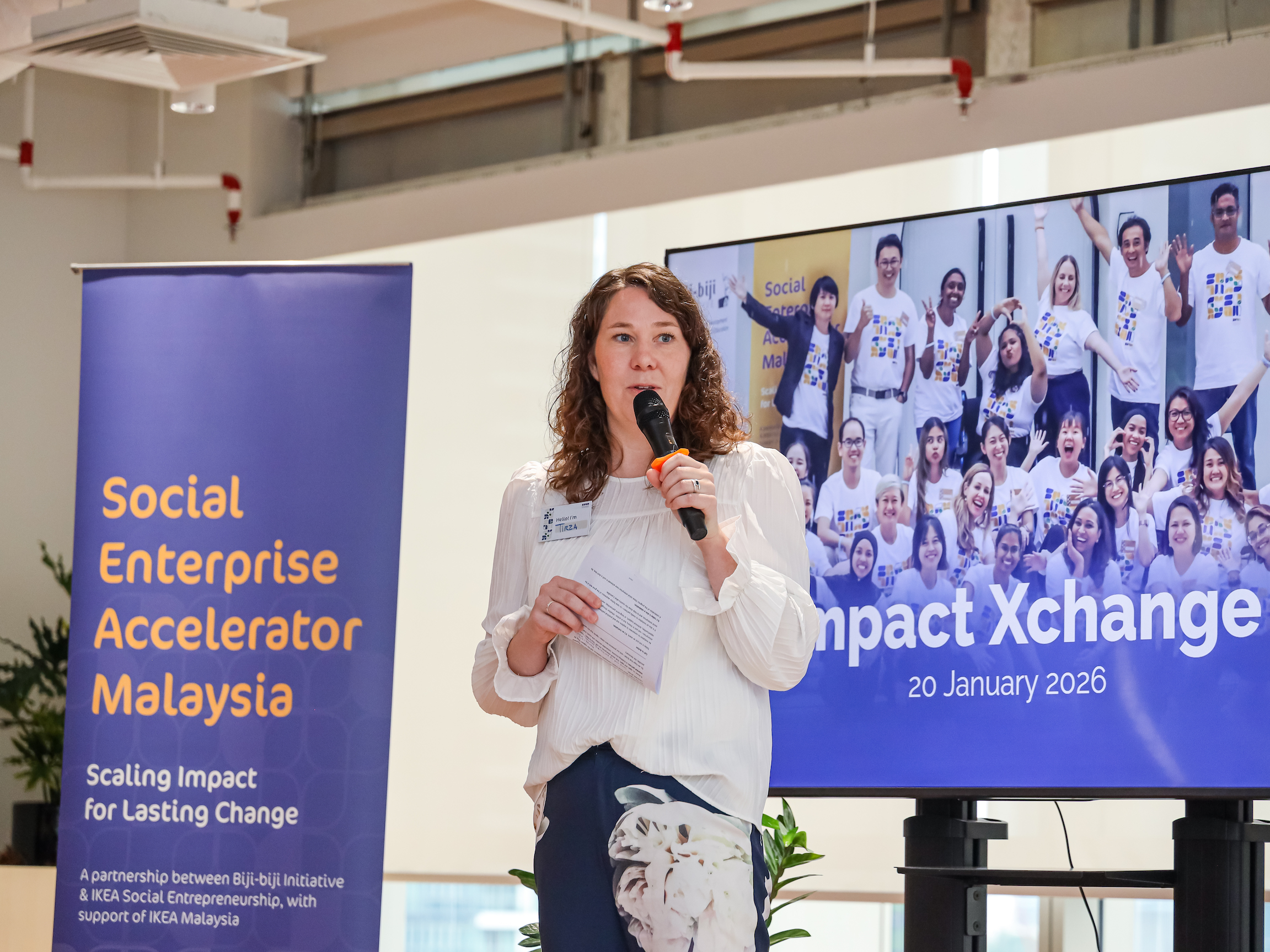
SEAM is a partnership between Biji-biji Initiative and IKEA Social Entrepreneurship, with the support of IKEA Malaysia. The 15-month accelerator programme is designed to strengthen Malaysia’s social enterprise ecosystem through capability building, market access and partnership enablement. The Closing Summit highlighted how social enterprises can move beyond short-term grant dependency to become business-ready and corporate-ready, enabling longer-term, scalable partnerships.
The summit convened key stakeholders across the corporate and social enterprise ecosystem, including representatives from the Ministry of Entrepreneur Development and Cooperatives (KUSKOP), Institut Keusahawanan Negara Berhad (INSKEN), alongside programme partners Sustainable Creative & Innovation Centre (SCENIC), Selangor Digital Economy Corporation (SDEC) and the Centre for Social Entrepreneurship Development (CSED). The gathering brought together ecosystem leaders and corporate participants committed to advancing impact-driven collaboration.
Malaysia’s social enterprise ecosystem continues to grow amid persistent community livelihood challenges. Disparities in income security remain pronounced, with rural poverty rates estimated at around 12 per cent, significantly higher than urban poverty levels of approximately 3.7 per cent, underscoring the need for inclusive, community-based economic pathways. At the same time, Malaysian companies are facing increasing pressure to demonstrate credible ESG practices as sustainability reporting requirements tighten for listed issuers.
Against this backdrop, the SEAM Closing Summit illustrated how social enterprises are already translating inclusive and sustainable ambitions into real-world outcomes from job creation and income generation to circular solutions and corporate partnerships that can be scaled.
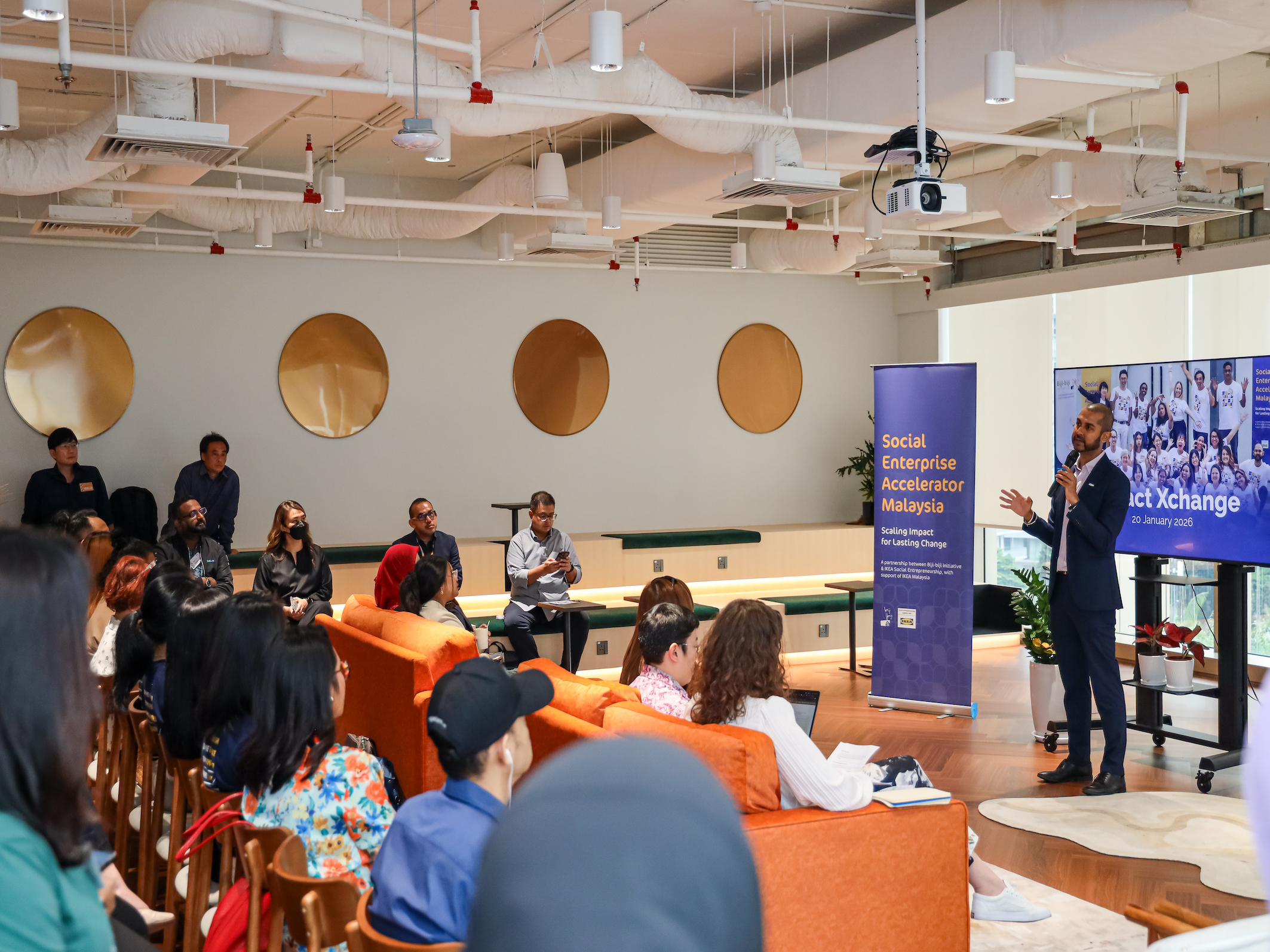
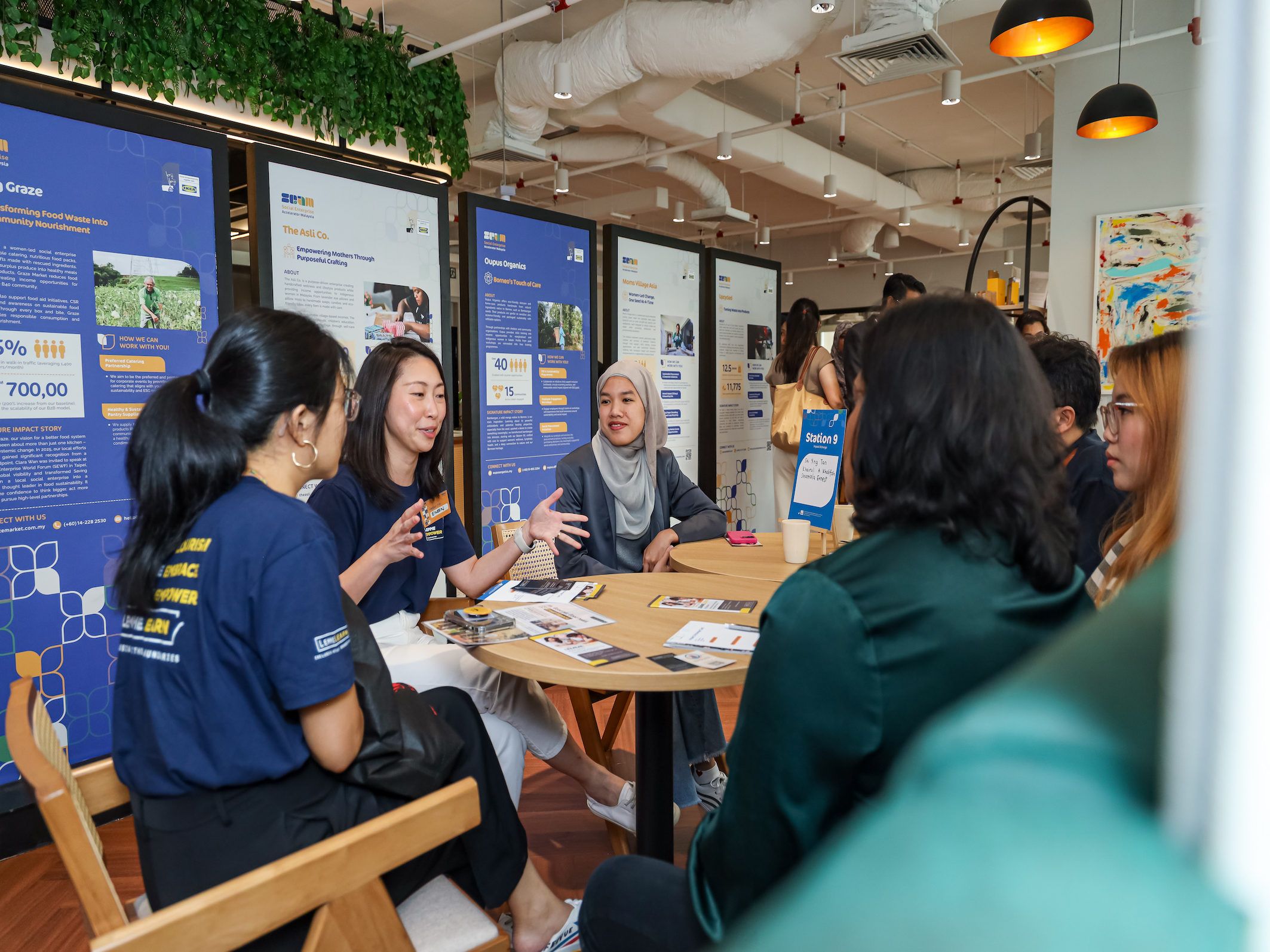
A core feature of the summit was Impact Xchange, a thoughtfully curated session to give corporates direct access to founders and impact models. During the session, social enterprises delivered elevator pitches in thematic groupings
Inclusive Employment
Angel Community, Batik Boutique, Earth Heir, Lemme Learn, The Asli Co.
These social enterprises shared how they are creating dignified income and employment pathways for underserved communities including women, artisans, Orang Asli communities, refugees and neurodiverse individuals through commercially viable business models. Notably, The Asli Co. was among organisations recognised at a national level when the Queen consented to select handmade products by B40 women, single mothers and Orang Asli as Istana Negara souvenirs, underscoring growing recognition for community-made products as part of Malaysia’s national narrative.
Circular Economy & Waste Management
Saving Graze, Moms Village, Oupus Organics, Upcycled
Founders highlighted how food waste, plastic waste and discarded materials are being transformed into products, jobs and scalable circular solutions rooted in community participation.
Sustainable Agriculture & Renewable Materials
Jiwa Asli Organik
The session focused on indigenous-led sustainable agriculture, food security and renewable materials, demonstrating how climate-smart farming approaches can support livelihoods while protecting ecosystems.
The summit also hosted Corporate × Impact Business Speed Dating, a fast-paced matchmaking session where corporates, including Telekom Malaysia, PLUS, CIMB Islamic, Hong Leong Group, among others engaged with social enterprises through seven-minute, curated conversations. The format enabled practical discussions around procurement, services, workshops and long-term collaborations, giving participants insight into how impact partnerships can be operationalised.
Juliana Adam, Chief Executive Officer, Biji-biji Initiative, said “Building a future-ready Malaysia requires us to rethink how opportunity, sustainability and inclusion come together. What SEAM has demonstrated is that social enterprises are not peripheral to this agenda, they are capable of creating jobs, strengthening communities and delivering solutions that corporates can work with at scale.”
Åsa Skogström Feldt, Managing Director of IKEA Social Entrepreneurship B.V., said: “Social enterprises play a key role in building inclusive economies, and long-term impact depends on strong business foundations and, in some cases, broader system-level change. SEAM was designed to strengthen market readiness and operational capabilities, enabling social enterprises to expand beyond project-based initiatives and engage in scalable partnerships with corporates and consumers.”
As SEAM closes its first cohort, the programme is now turning its focus to what comes next, strengthening pathways for more social enterprises to become partnership-ready and scalable. With the Biji-biji Pre Accelerator and SEAM Cohort 2 set to follow, interested social enterprises will have the opportunity to register to be considered for upcoming intakes, while corporates, ecosystem partners and policymakers are encouraged to continue exploring how social enterprises can be integrated into procurement, supply chains and long-term collaboration models that deliver both measurable impact and business value.
Source: Social Enterprise Accelerator Malaysia (Press Release)