Home Blog Page 142

Malaysia : First Green Condominium Project Receives Green Mark

The first green condominium project on the Penang Mainland, the River Tropics in Seberang Jaya, just received the Green Mark of Singapore’s Building and Construction Authority (BCA) on top of the GreenRE Gold certification from Real Estate and Housing Developers Association. The project is developed by New Bob Group.

Dpenang-hill-1024x576-e1451981091937r Lee Ville, the New Bob Group Director, said that the building would have all the green building technologies installed and is designed to minimize the impact on the environment.The windows in all 148 units of the building will be installed in such a way that it can maximize the natural light coming in and will use non-volatile organic compounds as paint. By consuming less energy usage and saving more water, residents are able to spend less money.

In conjunction with the River Tropics’ ceremony, Jagdeep Singh Deo, the Chairman of State Housing Committee, said that the state is looking for more ways to give the green building developers rewards, particularly on the mainland.

According to Jaagdeep Singh Deo, the reward would encourage developers to embrace the Green Building Index (GBI) and other international green ratings. He added that if a developer receives a GBI rating of gold and above, the Penang Island City Council will give back two-thirds of the development charges to the developer after construction is completed.

The refund could amount to several million and this can drive more developers to go green. However, there’s no incentive for buildings on the mainland as of yet and now there has been several other projects that have been rewarded green ratings other than GBI.

BUSINESS-LIFESTYLE-REVIEW-Banner-e1452321790903

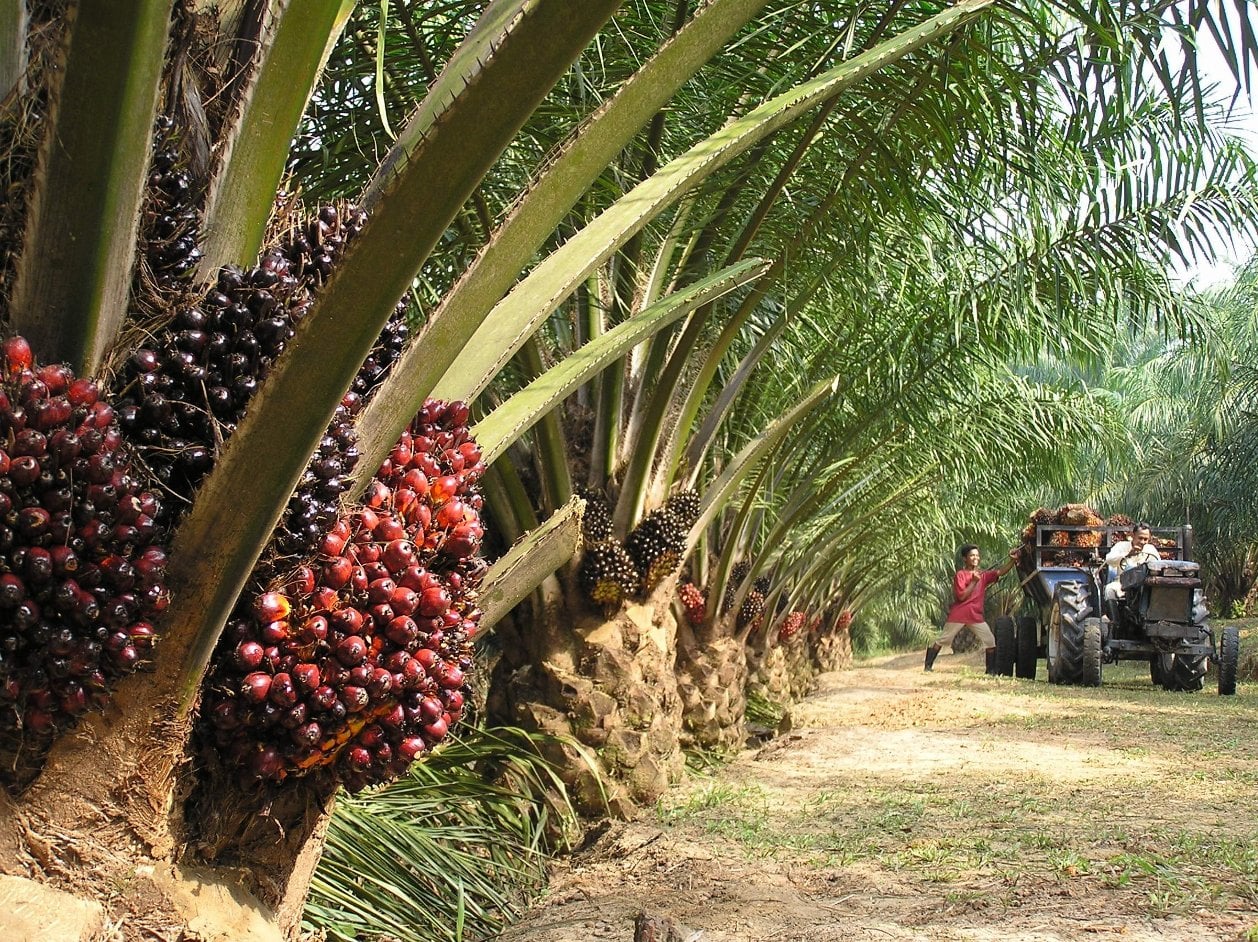
    The European Push for Sustainable Palm Oil

    The rotating EU Presidency now rests in the hands of the Dutch Government, for the first six months of 2016. The Dutch EU Presidency has shown recent signs that it intends to push for greater scrutiny of palm oil that comes into Europe. This could mark the first time that an EU Council Presidency has made palm oil a strategic focus of their sustainability agenda.

    Concerned-about-palm-oil-Boycotting-won-t-change-a-thingFirst, and foremost on the Dutch agenda will surely be the uptake of Certified Sustainable Palm Oil (CSPO), and the relative sparsity of uptake by European buyers and manufacturers. This lack of CSPO uptake in Europe – something that is causing discontent amongst key palm oil stakeholders – is critical, because of Europe’s position in the palm oil sustainability debate.

    Europe is the key source – really the only source – of NGO approved palm oil demand. Much of the demand for CSPO certified by Western NGOs is a result of anti-palm oil campaigns and risk-averse companies that have invested considerable amounts in their branded consumer products.  Despite this, uptake remains relatively low. The uptake of CSPO is roughly 50 per cent, and there is as such no premium on CSPO, even with higher production costs. However, there appears to be a new concerted policy push from both governments and the private sector to increase the uptake of CSPO via regulation.

    The push has most recently culminated in a new policy announcement by five European governments and a number of European bodies involved in palm oil. Late last year, a group of European nations – the UK, the Netherlands, Germany, Denmark and France – signed on to a commitment for ‘100% sustainable palm oil production’ by 2020.

    They have also requested that the European Commission convene a session of member states to examine the issue and policy options.

    This declaration indicates a political appetite among European policymakers and business – particularly in Northern European countries –for more stringent measures on palm oil.
    The Dutch appear to be leading this new push, and it looks as though the Dutch Presidency of the European Council will push broader trade and environmental goals, as well. Indeed, the Dutch trade minister indicated in a speech in December that the Netherlands would draft the support of the private sector to push other non-trade goals.

    This is not the first time that trade controls through regulation has been attempted in Europe, with the goal of supporting increased CSPO uptake (i.e. securing regulatory advantage for CSPO, or disadvantage for non-CSPO palm oil – which amounts to the same thing).

    Dutch importers during the last Dutch EU Presidency lobbied for a reduced tariff on palm oil certified as sustainable – an effort that clearly would have run into problems with trade law and with key trading partners (i.e. in SE Asia). The proposed reduced tariff, which was effectively an increased tariff on non-CSPO palm oil, never got out of the gate for the above stated reasons.

    A recent, more nefarious attempt in the dead of night through a non-transparent process was made to introduce discriminatory regulations favouring CSPO – in this case, a tax on all non-CSPO palm oil, that was proposed in Italy in late 2015, as part of the Parliamentary budget process. Again, the proposal died straight away.

    The new push, led by the Dutch EU Presidency, appears to instead draw from three separate policy initiatives related to forestry that emerged from Europe over the past decade or so.

    These three items are likely the potential ‘blueprints’ that the Dutch effort could attempt to follow.

    • First, a UK procurement initiative that emerged around 2010. This was effectively a voluntary measure that was instituted by the Department of the Environment, Food and Rural Areas (DEFRA). The initiative worked with palm oil importers towards an aspirational target to have all palm oil going to the UK certified as sustainable by 2015.  The initiative fell well short of its target and was disbanded after three years. However, the new initiative appears to have adopted almost the same approach.
    • Second was in the Netherlands, which had a similar approach to that in the UK. This was known as the Dutch Task Force on Sustainable Palm Oil, led by the Dutch Product Board for Fats and Oils (MVO). While nominally a private-sector push, the task force relies on significant Dutch, Danish and Swiss government funding via the Dutch body IDH, also known as the Sustainable Trade Initiative. The Task Force has pushed for similar goals to the UK measures, i.e. to have all palm oil imported into the Netherlands to be CSPO.
    • Third, and arguably most significant is the EU’s Forest Law Enforcement, Governance and Trade (FLEGT) program. It concerns for the most part the ‘legality’ of timber products exported to the EU. FLEGT has been a multi-million dollar program with two significant policy measures.
      • One is the introduction of ‘due diligence’ rules for European importers. European importers must – under threat of legal penalty – assess the legality of any timber products they are importing.
      • Another is the establishment of an environmental trade agreement known as a voluntary partnership agreement (VPA). Under the VPA system, timber will only be exported to the EU if it meets a particular agreed standard for legality, which includes environmental regulations.

    The EU is currently exploring the possibility of extending this FLEGT program to other commodities imported to the EU.

    This is similar also to approaches taken in relation to conflict minerals on both sides of the Atlantic, and more recently, with reporting on policies in relations to child or trafficked labour in the State of California. In these cases, the reporting requirements are those that basically demonstrate that some level of risk management has been undertaken. However, the requirements make parties that are essentially innocent so paranoid about auditing that extreme levels of compliance are implemented that don’t actually go towards solving any social or environmental problems.

    These three abovementioned policies, in combination with the most recent announcement in the Netherlands, indicate that the EU – and certainly specific EU states – is taking some sort of environmental trade control seriously.

    This has not gone unnoticed by palm oil producing countries, and efforts by the Dutch Presidency to implement policies based on these scenarios would risk disagreement with palm oil producing countries – key trading partners for the EU in general, and the Netherlands in particular.

    The-Thinking-Business-Blog-BannerThe bigger question is whether the EU is of the opinion that it can undertake these measures unilaterally in the light of recent policy initiatives in both Malaysia and Indonesia.
    Both countries have introduced government-backed sustainability standards for palm oil production. The Malaysian standard in particular follows national standards procedures and conforms with norms established in the International Standards Organisation (ISO).

    Any move by the EU – or EU nations – to push a private, non-governmental standard rather than recognise one that has been established by a sovereign government would have further ramifications for European trade policy and any trade push by the European Union into the palm oil-producing region in South-East Asia. The idea that the EU wouldn’t to some extent recognise a standard established by one of its trading partners is politically dangerous.

    The EU, for example, recently announced a new trade strategy called ‘Trade For All’. The policy states that Asia is crucial to Europe’s economic interests; yet Asia appears to be something of an afterthought in EU foreign policy. The EU-Singapore free trade agreement went ahead because there was nothing contentious in it; in some ways it can simply be considered an agreement on investment and services. The EU-Vietnam agreement negotiations concluded in December; and there is still at least an 18-month legal review and ratification period ahead.

    But the reality is that the EU’s trade relationship with most ASEAN countries has stagnated; as demand in Europe wanes, its manufacturers and services providers need greater market access in growing markets.

    The only way this will happen is with careful and considered bilateral or multilateral engagement that covers national standards, EU trade regulations such as due diligence laws and broader trade engagement. If European countries want to say which palm oil can enter Europe, and which can’t, they must be aware that this will come at a price.


    BUSINESS-LIFESTYLE-REVIEW-Banner-e1452321790903

      Business Trip: Ipoh

      machinery Malaysia Global business ForumNot all business in Malaysia is done in the capital Kuala Lumpur, the Malaysia Global Business Forum will look at the state capitals where there is plenty of business being done yet many overseas business people are yet to explore both in terms of business opportunities and as a place to visit.

      According to Invest Perak, the government body responsible for promoting investment into the state the promoted industry that will drive the economy forward include: Iron & Steel-related Industries, extraction of the natural-resources mainly non-metallic minerals, Perak is the country’s major producer of limestone products, tin, kaolin, clay and mica, Marine Oil & Gas-related Engineering Fabrication and Marine-related Industries, Machinery & Machinery Components, Transport Equipment & Components, Electrical & Electronics, Manufacturing-related Services, Renewable Energy-Related Industries, Bio-chemMedical & Scientific Devices, Biotechnology, Education Sector, Halal Industries, Oil & Gas Downstream Activities

      IpohThe Perak government has plans to create the Southern Perak Development Region encompassing the Batang Padang and Hilir Perak districts as the area is not within any economic development corridor.  Menteri Besar Datuk Seri Dr Zambry Abdul Kadir said the area’s overall development plan when fully complet
      ed, would be officially forwarded to the federal government. “We want this area to be developed using the models of the economic development corridors or the Iskandar Malaysia Development Region in Johor,”

      Historically, Ipoh developed into one of Malaysia’s main cities due to an early 19th century tin mining boom. During the British colonial era, it was Malaya’s second administrative centre after Kuala Lumpur.  A post-independence economic decline let the city escape the towers of concrete that represented 1970
      s ideals of progress and its colonial importance still shines in the grand old buildings, such as the railway station and the town hall, which complement the rows of shop houses.  These days Ipoh is perhaps best known for its excellent restaurants, hawkers, and famous local dishes. Making a business trip to the city well worth the 2 hour drive from Kuala Lumpur.

      A Few Things to Do

      Gunung_LangWhite Water Rafting:  The excitement of rapids and get up close and personal with nature, experience an exotic and mystifying rainforest where the fastest butterflies swarm by the riverbank while you enjoy swimming in the river or jump from trees or just glide down the river on a raft.

      Caving Gua Tempurung the largest limestone cave in Peninsular Malaysia, Located close to the North South Highway provides the opportunity to explore in detail the insides of a limestone cave, experience the cave with a short tour or adventure into the far end of the cave by walking off the walkways and i
      n the cave’s river.

      The Lost World of Tambun Hot Springs and Spa, is Ipoh’s only water theme park, it provides great rides and entertainment for families and also organizes tours into the nearby limestone caves for those interested in eco-tourism. The recently opened a Petting Zoo allows children the opportunity to feed and pet a variety of animals.

      Where to Stay

      weddingsandbanquets_img

      Finding the right place to stay is perhaps the most difficult decision when travelling outside the capital.  The Casuarina Hotel at Meru is a new 146 guestrooms & suites Premier Business hotel strategically located within the heart of Bandar Meru Raya just outside of the centre of Ipoh, which can make travel in and around the area easier.

      The Convention Centre, the Meru Raya Convention Centre, is the biggest pillarless convention hall in Ipoh with a seating capacity of 2500 pax with up-to-date audio-visual and meeting aids.  With a modern contemporary concept, all rooms are spacious and equipped with luxurious guestrooms features. Combined with warm hospitality and the reputable ‘Casuarina’ service, your stay with us will truly be a memorable and fulfilling experience.

      BUSINESS LIFESTYLE REVIEW Banner


        The Weekend Trip: Penang

        Penang Malaysia Global Business ForumPenang is one of the most vibrant and business friendly parts of Malaysia, historically known as the Pearl of the Orient, founded by Captain Francis Light in 1786, Penang Island was the first British crown colony in Malaya, the historic centre of George Town has been listed as a UNESCO World Heritage Site since 2008. Penang has a lot to offer the business traveller and those looking to unwind.

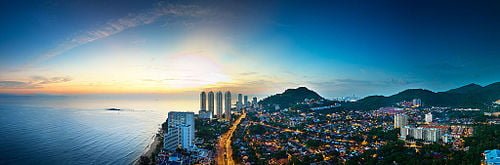
        There is plenty to see and do in Penang. Wander around on foot or in a rickshaw through the narrow streets and alleys in Penang’s charming capital city, George Town a UNESCO World Heritage Site, is at the heart of this compact city is filled with historical architecture, shops, and cafés. Take a short cable ride up Penang Hill to soak in the spectacular views of George Town and the Penang Bridge.

        Discover a sense of cultural serenity at Kek Lok Si Temple. A sprawling hilltop structure, it is the largest Buddhist temple in Malaysia. Dating backto the early 20th century, the clan house Khoo Kongsi is not to be missed, and the wonderfully restored Pinang Peranakan Mansion is also worth exploring.

        See the endless collection of toys at the Toy Museum Heritage Garden. Located at Lebuh Farquhar, the Penang Museum & Art Gallery contains exhibits of old photographs, maps, charts, relics, and paintings showcasing Penang’s history. More history can be found at the well-preserved Fort Cornwallis, built by the sea in 1786. For an appreciation of nature visit the Botanical Gardens or Penang National Park.

        Penang is known for its food, Savor tasty treats in one of Penang’s famous Chinese bakeries. Sample the abundant seafood as well as legendary local specialties, including char kway teow, laksa asam, rojak, and cendol. For exciting nightlife, Upper Penang Road (UPR) is popular with locals and visitors alike.

        Where to Stay

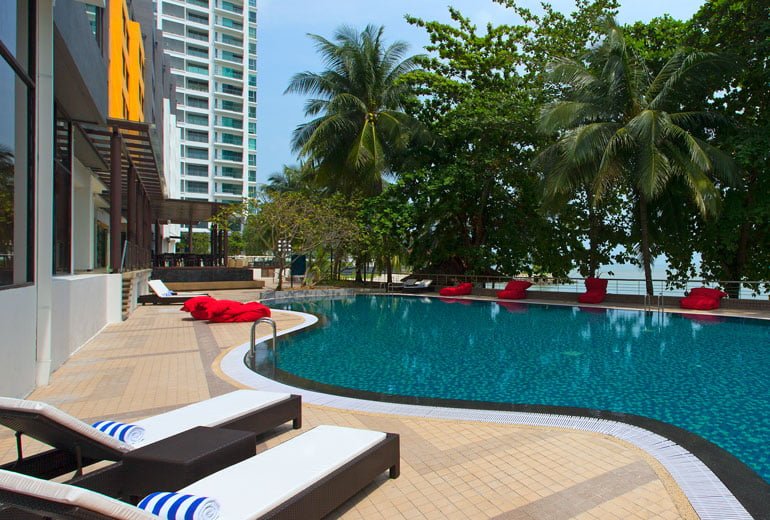
        fpt3947po.141636_xxThe Four Points by Sheraton Penang is conveniently located along a beachfront in Tanjung Bungah a 25-minute drive from the 13.5-kilometer bridge that links the island to the mainland, and just 40 minutes from Penang International Airport (PEN).

        If you need to get some work done or upload photos to Facebook the free wireless High Speed Internet Access and a fully equipped business center. Blow off some steam with a good workout in the well-equipped fitness center, or take a dip in the inviting outdoor pool.

        Deluxe Oceanfront Suites feature stunning strait views, each suite includes a separate living room and a pantry, which are ideal for families and long stays. Located on higher floors and include convenient dining areas. Every Executive Oceanfront Suite has an expanded workspace, a guest bedroom, and a large bathroom with a separate bathtub and shower.

        If you need even more space, try our Four Points Suite. A large desk makes it easy for you to work, and a dining area is perfect for small gatherings. Take all the time you need to get ready for your day in the spacious bathroom that has a separate bathtub and shower.


          MGBF Industry Reports on BERNAMA TV

          Business Matching Services Malaysia

          The Malaysia Global Business Forum will produce its own television programs “MGBF Industry Reports” will explore different industries sectors in Malaysia and how they intersect with the global economy. To assist companies in their expansion the Malaysia Global Business Forum partnered with BERNAMA TV the leading news channel in Malaysia.

          “We have always had a close working relationship with BERNAMA from the outset of the Malaysia Global Business Forum.  BERNAMA has much to offer including, Newswires, Television, Radio and the leading online media portal in Malaysia which makes it a strong partner so when we decided to expand our brand into television we BERNAMA TV was a natural choice.” Stated the Organising Chairman Nordin Abdullah

          “In a recent survey by 86% of SME’s in Malaysia expressed they would like to take advantage the power of television but less they 20% of them had any experience with television” continued Nordin

          MGBF Industry Reports will develop the following:

          • A series of different industry sectors making news in Malaysia
          • Exploring the different states that making business news in Malaysia
          • Bilateral business, where we find Malaysian businesses globally and in what sectors have they success

          MGBF Industry Reports will also be available online on MGBF’s dedicated YouTube Channel.

          http://www.youtube.com/watch?v=Yfej9NMdVus&list=UUVk_O70HOamiQHPJiNDVBvQ


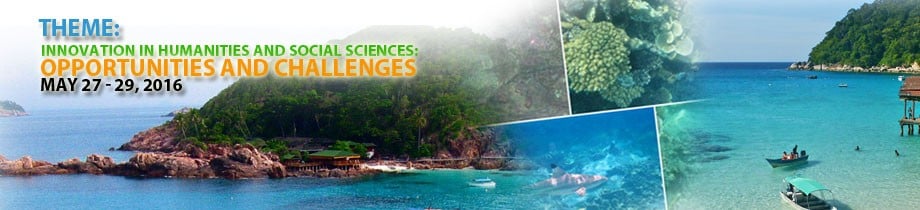
            Innovation in Humanities & Social Sciences

            Defence Confernce
            8th International Conference on

            Humanities and Social Sciences

            (ICHiSS 2016)

            “Innovation in Humanities and Social Sciences: Opportunities and Challenges”

            Date: May 27-29 May 2016

            Venue: The Royale Chulan Damansara, Selangor

            In the current global climate which is increasingly defined by geopolitical and punctuated by terrorism the need for innovation in the humanities and social sciences has become more important. These challenging times have also created opportunities for nations and organisation to play a leading role in shaping the future.

            ichis-historyThe Faculty of Defence and Management Studies at the National Defence University of Malaysia (NDUM) together with Prince of Songkla University of Thailand (PSU),  The Chartered of Logistic and Transport (CILT) and Malaysia Global Business Forum (MGBF) co-organized The 8th International Conference on Humanities and Social Sciences, (ICHiSS 2016) .

            NDUM which put a strong emphasis on academic excellence with a special focus on military related elements, NDUM also gives a great attention in spurring the knowledge in the fields of social sciences and humanities such as politics, history, Islamic studies, culture and civilization studies. This is complemented with the need to enrich the students with general knowledge and soft skills such as thinking and communication skills.

            This conference provides a rare opportunity for our academicians to discuss humanities topics related to culture, politics, nation state, ethnic relation, business culture and issue related to management. Being a multi ethnic society with three biggest communities, the Malay, Chinese and Indian and each ethnic community possesses a distinct identity in terms of custom, social norms, literature and art, bringing this conference into the country fitting well to the spirit of the conference.

            For further information, kindly visit our website: : ichiss.upnm.edu.my

            Organizing Chairperson
            Dr. Jessica Ong Hai Liaw
            National Defence University Malaysia (UPNM)
            Faculty of Defence and Management Studies
            Sungai Besi Camp
            57000 Kuala Lumpur
            Malaysia
            +60390513400 Ext.7622080
            Fax: 0390512559
             

              World’s First Global Halal Data Pool launched

              top-website-banner-food-secure


              HDC introduces smart system that facilitates the growth of Malaysia’s Halal products and services for the export market

              KUALA LUMPUR — With the growing complexity of the USD2.3 trillion global Islamic market and the demanding and emerging trends evolving, the need for a Global Data Halal Pool for Halal products and services was tonight launched by Halal Industry Development Corporation (HDC) to support industry players.

              The Global Data Halal PoolPic 4, a world’s first, was launched tonight in conjunction with the SMIIC Halal Conference 2015 by Datuk Haji Ahmad Haji Maslan, Deputy Minister (Industry) of International Trade and Industry. Also present at the GHDP launch were the Deputy Minister (Trade) of International Trade and Industry Dato’ Lee Chee Leong, Deputy Minister in the Prime Minister’s Department Senator Dato’ Dr. Asyraf Wajdi bin Dato’ Dusuki, Deputy Minister of Science, Technology & Innovation Datuk Dr Abu Bakar Mohamad Diah and HDC Chairman Tan Sri Datuk Dr Syed Jalaludin Bin Syed Salim.

              Speaking at the launch, HDC Chief Executive Officer Dato’ SeriJamil Bidin said, “The Global Halal Data Pool (GHDP) has been developed to connect Malaysia to the international Halal supply chain through a central depository of authenticated Halal trade information.”

              The role of the GHDP underscores the primary importance in Halal governance, certification, services and supply chain. This is especially true since tracking of ingredients and logistics are key elements in maintaining the integrity of Halal products. The GHDP is a collaborative effort between HDC and its key partner GS1, adopting standards with portfolio ranges from BarCodes to eCom (electronic commerce tools) to next generation technologies such as EPC global (using RFID) and solutions such as GDSN (data synchronisation) and GS1 Traceability.

              GS1 is an international non-profit organization dedicated to the design and implementation of global standards and solutions to improve the efficiency and visibility of supply and demand chains globally and across sectors. With its head office registered in Belgium, GS1 has more than 30 years’ experience in the development and support of global supply chain standards and technologies.

              Pic 3“GHDP is a smart system that facilitates the growth of Malaysia’s Halal products and services by creating opportunities for export participants (including SMEs) through linkages established with 34 existing datapools globally,” said Dato’ Seri Jamil. GHDP has a standard format making it easy for business owners to upload detailed product information including ingredients, expiry dates, size of packaging, pricing, pictures, all using common templates.
              “Common and globally accepted standards allows for ease in sharing product data across a host of retailers and members of the supply chain across every corner of the world. The common formats reduces the need for reformatting based on different countries or retailers, reducing the time to go to market and provides wider market access,” added Dato’ Seri Jamil.  GHDP would allow the identification and capture of information about Halal products and services, and enable the sharing of such information in a simple, fast and accurate manner.

              “Certainly, this would allow Malaysian Halal business owners easy access to the world’s retailers and traders.” As a result, Malaysian Halal products would take prominence with better visibility on the global front through GHDP. There is efficient and accurate business data to strengthen capture of markets. GS1 offers a diversified portfolio of products, solutions and services including the GS1 System of standards, the most widely used supply chain standards system in the world.

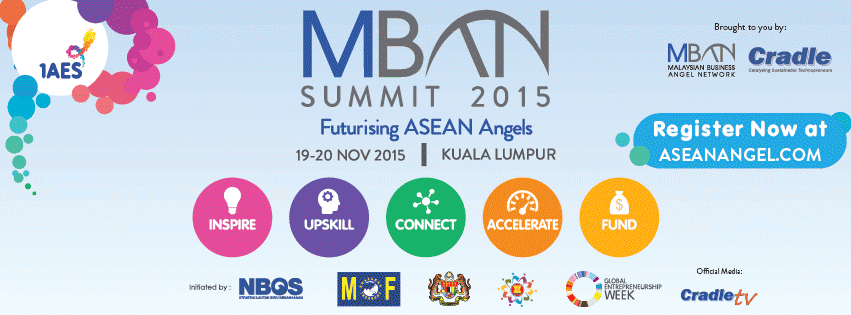
                “Malaysian Business Angel Network Summit 2015

                “Malaysian Business Angel Network Summit 2015”

                (MBAN Summit 2015)

                Futurising ASEAN Angels

                19 & 20 November 2015

                This two-day Summit is targeted at existing and prospective angel investors, the investing community, ecosystem players and entrepreneurs to raise greater awareness on angel investing, build capacity as well as forge networks across Malaysia and the ASEAN region.

                ASEAN AngelsKey highlights will be a presentation on the findings of a research study on angel investing in the ASEAN region titled “A Journey of Discovery: Angel Investments in ASEAN” by Prof. Richard Harrison of the University of Edinburgh and an “Investor Day” on Day 2 featuring Angels in the City Workshop, Pitch Sessions showcasing innovative local startups and a Chill Out Session with the Secretary General of the Ministry of Finance Malaysia (MOF) close what promises to be an impactful two day event.

                This event is co-organised by the Malaysian Business Angel Network, the official trade association and governing body for angel investors and angel clubs in Malaysia and Cradle Fund Sdn Bhd (Cradle), an agency under the Ministry of Finance Malaysia that provides funding and other value added support and assistance to innovative early stage technology entrepreneurs.

                Event details:

                Date & Time
                19 November (Thursday), 9.00am – 5.00pm
                20 November (Friday), 9.00am – 7.00pm

                Venue
                Hall 2, Jalan Kia Peng
                50450 Kuala Lumpur
                Map
                For the full programme and information, visit www.aseanangel.com.

                REGISTER Today at http://aseanangel.com/

                IMPORTANT:
                *Food coupon is only available for successful registrations received by 6.00pm, 9 November.
                *You will be issued a ticket upon confirmation of registration. Please print OR download your ticket on your mobile phone for admission.

                We look forward to seeing you there!

                  The Future of American Business in Malaysia

                  What are the key industry sectors that American companies will be able to dominate in Malaysia? What unique strategies will be effective for American companies competing in South East Asia as China expands its economic influence? What are some of the simple mistakes that many companies make during the set up stage in a new market? How will the Trans Pacific Partnership Agreement (TPPA) change things?

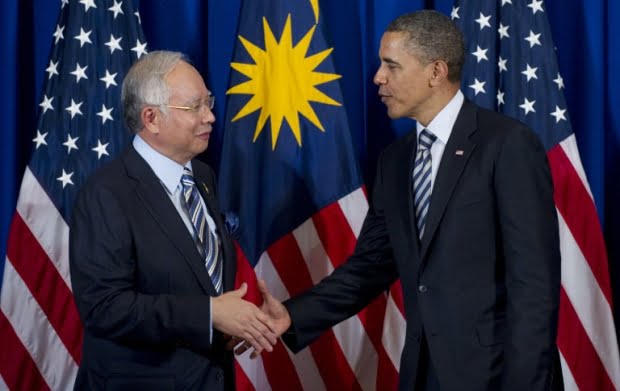
                  obama shakes hand with najib PM MalaysiaIn April 2014 US President Barack Obama arrives in Malaysia – the first serving American leader to visit the predominantly-Muslim nation since 1966.  Like Lyndon Johnson in the 1960s this created a lot of good will in many sectors, now there is need to convert that good will into business.

                  According to the latest data available U.S. foreign direct investment in Malaysia was USD15.0 billion in 2012 representing a 21.1% increase from 2011.  While there is a broad representation in the economy manufacturing and mining sectors are the leading sectors in terms of investments into Malaysia.

                  Sales of services in Malaysia by majority U.S.-owned affiliates were USD7.3 billion in 2011 (latest data available), while sales of services in the United States by majority Malaysia-owned firms were just $243 million.

                  The US needs to understand Malaysia’s strategic vision and help with its implementation to continue to enjoy the considerable influence that it currently enjoys, the shifting economic focus of Malaysia as it strives to become a high income economy. The gravity of the Chinese business both in terms of investment and as a key market for Malaysian products and increasingly tourism sector.

                  It remains to be seen if the Trans Pacific Partnership will become a reality and will it be able to balance this growing trend.  While much has been said that negosiations have concluded getting it past the US Congress and a host of parliaments is still work to be done.  In October 2010, Malaysia joined the ongoing Trans-Pacific Partnership (TPP) negotiations. In addition to the United States and Malaysia, the TPP negotiating partners include Australia, Brunei, Canada, Chile, Mexico, New Zealand, Peru, and Singapore, and Vietnam. Starting with a group of like-minded countries, the goal is to expand the agreement to include countries across the Asia Pacific, which together represent more than half of global output and over 40 percent of world trade.

                  Kuala Lumpur is one of the most liveable cities in Asia, with many American food franchises have mushroomed in the many world class shopping malls in the capital.  Education for expats a real concern, ISKL or the International School of Kuala Lumpur still remains the school of choice. One of the most established international schools in the country has traditionally been the school of choice for students from the United States of America, there is now a wide range of internationally certified international schools in the country that cater to different education systems and budgets.

                  Business Matching & C-Suite Services

                  The Malaysia Global Business Forum will continue to work with American companies and help them answer the difficult questions that come up during the various stages of the business life cycle as they expand into Malaysia, ASEAN and the wider Asian markets, for more information about BUSINESS MATCHING and C-SUITES SERVICES

                  A graduate of the International School of Kuala Lumpur, Nordin Abdullah is the Managing Director of Glenreagh a boutique consultancy firm in Asia and the organisers of the Malaysia Global Business Forum.

                    Is the Sphere of Influence Turning?

                    According to the latest brief of Asia Maritime Transparency Initiative (AMTI) the tension between China and its neighbors is growing. Vietnam and Philippines report of growing number of harassment of innocent fishermen by Chinese Coast Guard vessels. The concerns lead to further cooperation between the countries of South China Sea. Japan and Philippines conducted military drills 22-26 June 2015 and this is the most obvious reaction to the expansion of the Chinese sphere of influence around the region.

                    0Apart of the constant military drills closer to the coast, China has and puts in action its plans for the control of the seas hundreds of kilometres away from its coasts. The latest photographs of Spratly Islands in the media show that China has ‘built up’ the islands and equipped those islands with military outposts. Another concerning points on the map are Fiery Cross Reef and Johnson South Reef which are already functioning as naval bases and yet undergoing the noticeable land reclamation.

                    US military experts, now joint with Australians, are raising the awareness around the region scarring the ASEAN countries with predictions of Chinese taking full military control of South China Sea and beyond. Such predictions are always followed with possible scenarios of regional security braking from the ‘concern worth’ status to a bad one in short period of time.

                    The growing hysteria is never about the naval power itself, even though it is mostly talked about as the reason for such. The other points of the expansion are the resources of the South China Sea like oil and gas, found in the last decades. The very first Chinese rig platform known as ‘Ocean Oil 981’ opened in 2012 is placed in the same region of South China Sea, its main shareholders are J.P. Morgan Chase & Co. (19.01%), Commonwealth Bank of Australia (14.05%). The years old sea dispute looks in a different light when money talks.

                    Since American and Australian companies are not afraid to do business with Chinese regardless what the military experts warn about. What’s in it for Malaysian business? Malaysia definitely has a voice in this sea argument but what about incomes from further oil extraction which is going to grow in number and Chinese are currently working on this issue. Could Malaysians be the main shareholders of those new rigs coming up to profit, instead of being scared off by military experts?

                    MGBF Food Security, Trade - InvestmentTaking into account that the area is already secured by Chinese and it is safe to say no one is going to mess with them. Fact is, the new rigs are to be installed and the possible incomes are yet to be counted, thus before it is all done, Malaysian business could easily start cooperation with Chinese companies meanwhile Americans are scaring the rest of the region.

                    Could Malaysia become a bigger business partner to China? Even the island building process is set in motion by Chinese is point to be considered by Malaysians as another opportunity to invest instead of being a neighbour witness. Fact is, China has completed a major part of the land reclamation, the abovementioned islands are not the end since no expert said that China’s plan is fulfilled, consequently, there are more islands coming. Meanwhile the story repeats, more business can be done.

                    Part 1 of The Malaysia Global Business Forum’s series on the “Economics of the South China Sea” we will explore what the changes mean for business in the region and keep track of how is winning the battle to control the resources above and below the waves, as the situation unfolds.  Contributed by Sergey Ivankov is an associate researcher for Malaysia Global Business Forum and commentator on the socio-economic dynamics of global change