Home Blog Page 124

Malaysia Australia Business Council (MABC) congratulates the new Prime Minister of Malaysia

The Malaysia Australia Business Council (MABC) congratulates the new Prime Minister of Malaysia Tun Dr Mahathir bin Mohamad and Pakatan Harapan on the outcome of the 14th General Election yesterday. It was a powerful testament to the strength of the Malaysian democratic system.

Malaysia and Australia have had a long history of engagement and a relationship which has been strengthened through both prosperity and adversity. We look forward to this new chapter in Malaysia’s future and that Pakatan Harapan’s commitment to good governance will form the basis for sustained economic success.

Leigh Howard
Chairman, Malaysia Australia Business Council
www.mabc.org.my


    Rentokil Initial Builds a Healthier and Safer Future With Pest and Hygiene Awareness

    PETALING JAYA, MalaysiaMay 18, 2018 /PRNewswire/ — It is often said that education is the key to solving many world issues, and that ignorance can be deadly. In 2017, a total of 82,840 dengue fever cases and 171 dengue related deaths were recorded, while influenza and pneumonia mortality ranks at the 2nd highest cause of death in Malaysia. Although these deaths may not be completely avoidable, plugging out the ignorance about dengue awareness and proper hand hygiene may reduce the instances of dengue transmissions and mortality. In fact, studies done by Initial Hygiene have shown that good hand hygiene can prevent approximately 20% of respiratory infections.

    As a global leader in pest and hygiene solutions, Rentokil Initial aims to contribute more towards the sharing of awareness regarding Malaysia’s prominent health and pest issues. Hence on the 24th of April 2018, Rentokil Initial Malaysia launched Better Futures, a Corporate Social Responsibility (CSR) programme that stemmed from their mission to protect people and enhance lives. Similar to their previous programme, Better Futures will continue to focus on increasing awareness towards adopting good hygiene practices, and managing pest issues. With “Better Futures”, Rentokil Initial Malaysia aims to provide a solid educational foundation to enable a healthier and safer future for the community.

    Reflecting on their past CSR campaigns, Rentokil Initial Malaysia has attained yet another milestone of success in these CSR programmes, having reached out to more than 30,000 students on personal hygiene and dengue awareness since initiating their Personal Hygiene Awareness Training.

    Better Futures will continue running the Adopt-a-School programme, and aside from that, the second phase of Better Futures will also include community service and gotong-royong. This year, in conjunction with World Mosquito Day, the team at Rentokil Initial Malaysia will continue to conduct Anti-Dengue related activities to increase awareness on the threats of Aedes mosquitoes and the importance of maintaining a clean environment to reduce Aedes breeding grounds.

    As Ms. Carol Lam, the Managing Director of Rentokil Initial Malaysia aptly puts it, “Communities that are aware, are communities that are more likely to take action. When we all play our part, we can protect the ones we love, and enhance not only our own lives but also the lives of those around us. This is what Rentokil Initial stands for, and that is the goal we want to work towards through our Corporate Social Responsibility programmes.”

      Introduction to Human Capital Review

      Welcome to the Human Capital Review!

      The Human Capital Review is a media brand dedicated to the development of human capital, with a simple approach of “Building People, Building the Future”. The Human Capital Review focuses news and views that are effecting those managing our most important resource, our people.
      The Human Capital Review has dedicated content focusing the latest news, views and happenings with sections on:
      • Profiles of HR professionals
      • Issues facing the HR Industry
      • Training & Event Facilities (Hotels, Convention Centres & Team Building Venues)
      • Regulatory Issues & Policy changes
      • HR News & Current Affairs
      • Upcoming HR Conferences
      • External training programs
      • Internal training providers
      • Reviews of trends in the training industry
      • Announcement of appointments in the industry

      The Human Capital Review will be rolling out its own set of awards at the end of 2018, for those interested in nominating a company or an individual do let us know.

      The Human Capital Review will be hosted on the Malaysia Global Business Forum, on the 26th of July the full site will be launched at www.HumanCapitalReview.com

      The Human Capital Review is designed to engage with HR professionals and for those brands and products looking to provide solution to this highly competitive market. For the communications professionals who want to develop a relationship with these important decision makers, contact our team today to arrange a review.

        Epson Makes Major Push for Sustainability — Chooses TCO Certified

        STOCKHOLMFeb. 22, 2018 /PRNewswire/ — AV buyers will now have an easier time to make more sustainable choices, as market leader Epson is the latest to achieve the TCO Certified designation, for 45 of their professional projector models. 

        generated by system


        TCO Certified is the world’s leading sustainability certification for IT products. Certified products are independently verified to meet comprehensive environmental and social criteria throughout their life cycle. For projectors, criteria for high image quality are also included.

        “There should be no compromise between sustainability and product performance. A high-quality display image is vital for projectors. It can influence productivity and extend the usable life of a product which also creates sustainability benefits,” says Niclas Rydell, Director at TCO Development.

        The demand for more sustainable IT products is growing. A recent study by IT infrastructure supplier Atea shows that 74 percent of the IT buyers in the Nordic region consider sustainability as a very high or fairly high priority issue. TCO Development has driven progress within this field since 1992, with more than 2,800 product models currently certified. With Epson now joining Casio in certifying projectors, purchasers demanding more sustainable AV products have a lot more to choose from.

        “With TCO Certified, brand owners must implement socially responsible working conditions in the factories where certified products are made and are held accountable for correcting any non-conformities. Buyers can be confident that positive change will follow in the supply chain,” says Niclas Rydell.

        Epson’s commitment to TCO Certified is part of a strategy aimed at reducing the environmental footprint of their products and working proactively to protect human rights.

        Henning Ohlsson, Director of Corporate Social Responsibility at Epson, comments: “We have long seen how TCO Certified drives sustainability in the IT industry and we’re delighted that AV buyers can now also rely on the certification to verify that the Epson projectors they buy are manufactured in a socially responsible way.”

        Find certified products in our Product Finder.

        About TCO Certified

        TCO Certified is a global sustainability certification for IT products, founded over 25 years ago. Our comprehensive criteria are designed to drive social and environmental responsibility throughout the product life cycle. Certified products are independently verified for compliance. The certification covers eight product categories including displays, notebooks, tablets and projectors.


        SOURCE TCO Development

          Building a Board for a Private Equity Portfolio Company

          Building a Board for a Private Equity Portfolio Company: Who Makes the Cut?

          New report from WomenCorporateDirectors explores what PE firms look for in directors

          With the “buy to sell” nature of private equity placing special demands on portfolio company boards, PE firms look for distinct factors in recruiting new directors, says a new report from WomenCorporateDirectors (WCD) and Vinson & Elkins LLP.  “As private equity-backed company boards take a very active role in strategic targets and execution under clear timetables, they need directors who can mobilize around these priorities,” explains Susan C. Keating, CEO of WCD. Kapila Anand, lead director of WCD and director at Extended Stay America, Inc. and ESH Hospitality, adds that “operating and strategy experience, transformation or complex problem-solving experience, digital skills, cybersecurity, and other evolving technology skills are in high demand at PE portfolio companies.”

          In “Building a High-Performing Private Equity Portfolio Company Board,” the latest board briefing from WCD, experts in governance and private equity discuss the skills, experience, and backgrounds PE firms are seeking and specific tips for potential candidates to position themselves best for a board seat.

          “Diversity in the boardroom has been a hot topic in recent years,” says Maritza Okata, Partner, Mergers & Acquisitions and Private Equity, Vinson & Elkins LLP. “While the PE sector has been largely insulated from public scrutiny compared to their publicly traded counterparts, there is growing recognition among PE firms that best practice includes embracing diversity in their board ranks.”

          Drawn from panelist discussions at the WCD Global Institute, the briefing participants include:

          • Kapila Anand – Director, Extended Stay America, Inc. and ESH Hospitality; Retired Partner and Senior Advisor, KPMG; WCD Chapter Chair and Lead Director,WCD Foundation
          • Andrea Nunes – Managing Director, Portfolio Talent at Centerbridge Partners
          • Maritza Okata – Partner, Mergers & Acquisitions and Private Equity, Vinson & Elkins LLP
          • Gabriela Perez – Partner, NextGen Ventures
          • Christine St. Clare – Director, Fibrocell Science, Inc. and AquaBounty Technologies, Inc.; former Director, Polymer Group, Inc.; WCD Chapter Chair

          Previous board briefings in the series from WCD includes:

          For more information about WomenCorporateDirectors Foundation and WCD programs for directors, please contact Suzanne Oaks Brownstein or Trang Mar of Temin and Company at 212-588-8788 or [email protected].  

          About WomenCorporateDirectors Education and Development Foundation, Inc.

          The WomenCorporateDirectors Education and Development Foundation, Inc. (WCD Foundation) is the only global membership organization and community of women corporate directors. A 501(c)(3) not-for-profit organization, the WCD Foundation has 80 chapters around the world. The aggregate market capitalization of public companies on whose boards WCD Foundation members serve is over $8 trillion. In addition, WCD Foundation members serve on numerous boards of large private and family-run companies globally. For more information visit www.womencorporatedirectors.org or follow us on Twitter @WomenCorpDirs, #WCDboards.

            PharmaMar Licenses Fully Synthetic Marine-derived Payloads to Seattle Genetics for Use in Drug Conjugates

            PharmaMar (MCE: PHM) has announced today the signing of an exclusive licensing agreement with Seattle Genetics Inc. (SGEN: NASDAQ GS) under which Seattle Genetics receives exclusive worldwide rights to certain PharmaMar proprietary molecules for the development, manufacture and commercialization of antibody-drug conjugates (ADCs) and/or other drug conjugates incorporating PharmaMar payloads.

            According to the terms of the agreement, PharmaMar receives an upfront payment of 5,000,000 US dollars on signing, followed by development milestones if a product enters clinical development conducted by Seattle Genetics. In addition, PharmaMar is eligible for potential approval and sales milestones as well as royalties, once a product receives regulatory approval and is commercialized.

            PharmaMar has a Marine Payloads unit. These are new, structurally diverse molecules with novel mechanisms of action that provide a unique opportunity to develop next generation ADCs. These payloads are highly potent, with sub-nanomolar cytotoxic activity. ADCs are targeted cancer treatments designed to harness the specificity of antibodies to deliver cell-killing agents directly to cancer cells.

            As Luis Mora, Managing Director of PharmaMar’s Oncology Business Unit, stated, We are glad to sign this license agreement with Seattle Genetics, a pioneer and leading company in the ADC marketbecause it allows us to work together in these cutting-edge cancer treatments.

            The payloads department at PharmaMar is new, placing the company as a supplier of cytotoxic products, necessary for all companies working within the field of ADCs.

            About Seattle Genetics Inc

            Seattle Genetics Inc is a biotechnology company that develops and commercializes monoclonal antibody-based therapies for the treatment of cancer. Seattle Genetics is headquartered in Bothell, Washington (US)http://www.seattlegenetics.com.

            About PharmaMar

            Headquartered in Madrid, PharmaMar is a world-leading biopharmaceutical company in the discovery and development of innovative marine-derived anticancer drugs. The company has a pipeline of drug candidates and a robust R&D oncology program. PharmaMar develops and commercializes YONDELIS® in Europe and has three other clinical-stage programs under development for several types of solid and hematological cancers, lurbinectedin, plitidepsin, PM184 and PM14. PharmaMar is a global biopharmaceutical company with subsidiaries in GermanyItalyFranceSwitzerlandUnited Kingdom, To learn more about PharmaMar, please visit us at http://www.pharmamar.com

            There have been several sites identified for clean technology and R&D with universities established in the state of Perak, during the program dedicated site visits will be conducted.

              Latest News on the EU Palm Oil Ban

              Malaysian smallholders protest

              Amendments to the EU’s Renewable Energy Directive (RED) are making their way through the legislative process in Brussels. The RED presents a huge issue for Malaysia, specifically for its palm oil exports, because the European Parliament intends to ban palm oil biofuels from 2021 – last year, its Environment Committee and the Industry, Research and Energy Committee voted for the ban.

              Brussels uses the RED as its main tool in regulating the biofuels sector. The objective is to highlight the EU’s use of renewable energy to reduce greenhouse gas emissions, and contribute to the region’s strategy to mitigate climate change. As part of this effort, the use of biofuels and other renewable energy sources is being promoted.

              The move to ban palm oil biofuels has been led by multiple protectionist Members of the European Parliament (MEPs), with Dutch Greens MEP Bas Eickhout and Spanish Socialist MEP José Blanco López at the forefront.

              The European Parliament’s protectionist position was confirmed on Jan 17, 2018 with 492 MEPs in favour of banning palm oil biofuels, 88 against and 107 abstentions. All other oilseeds will continue selling within the EU until at least 2030.

              It has been heartening, however, to note that Malaysia received support from many quarters in Europe. The UK Conservative MEPs – part of the governing party of Prime Minister Theresa May – voted against the ban. In a statement confirming their stance, they said they ‘could not support an arbitrary ban on palm oil, which will have an inflationary effect on food prices and cause significant economic damage to developing countries’.

              UK Conservative MEP Daniel Hannan, in a speech during the plenary, criticised other MEPs for wanting to ban palm oil: “The reality is that this is a vote driven by the interests of rapeseed producers here in Europe, specifically the biofuels industry at home.”

              In addition, 57 MEPs from Europe’s largest political party – the centre-right European People’s Party – proposed an amendment to remove the clause on the palm oil ban.

              Following the vote, Malaysia’s International Trade and Industry Minister Dato’ Sri Mustapa Mohamed said the ban is a “potential violation of World Trade Organisation rules”. Plantation Industries and Commodities Minister Datuk Seri Mah Siew Keong referred to it as “akin to crop apartheid”.

              Protest in KL

              On Jan 16, more than 2,000 Malaysian smallholders took to the streets of downtown Kuala Lumpur to protest the ban. As the event unfolded, photos, videos and comments were uploaded by advocacy groupfacesofpalmoil.org, which also posted tweets.

              A delegation of smallholders and MPOC officials hand-delivered a petition at a meeting with H.E. Maria Castillo Fernandez, the EU Ambassador to Malaysia. The petition was backed by 320,047 signatures collected from smallholders nationwide. The delegation relayed the message that millions of Malaysians would be affected by such an unfair and discriminatory ban.

              Mtg with EU Ambassador

              The Ambassador attempted to appease the group by saying that there is no ban on palm oil. However, many in the delegation felt otherwise. They based their stance on a press release by the European Parliament, which states that ‘MEPs want a ban on the use of palm oil from 2021’.  Furthermore, during debates on the RED, words such as ‘ban’, ‘phase out’ or ‘stopping palm oil’ were repeatedly used.

              Almost all the representatives of the smallholders spoke up during the meeting. Among them was Tuai Rumah Thomas Lamet, representing the Sarawak Land Consolidation and Rehabilitation Authority. He urged the Ambassador and the EU not to penalise innocent people, describing this as “cruel”. He said the ban would deprive them of a good life and create social problems because “oil palm [cultivation] sustains their life.”

              The Ambassador was further told that negative comments and claims made against the palm oil industry had affected the interests of smallholders. She then agreed to raise their concerns with the European Parliament, EU Council (made up of governments) and European Commission.

              The protest generated widespread publicity in major European cities and in Malaysia. It drew attention to the problems that 650,000 smallholders would face, as they depend on palm oil to earn an income and provide for their families. The ‘Faces of Palm Oil’ campaign, supported by smallholder organisations in Malaysia, secured close to 100 articles in the international media in January.

              Efforts remain in place to overturn the ban as the legislative process continues. A decision will be made in the coming months, in negotiations between the European Parliament, EU Council, and European Commission. The Malaysian palm oil sector must ensure that it keeps up the pressure, day after day.

              Belvinder Sron
              Deputy CEO
              MPOC

                Qlink Teams Up with Block Array to Enable Network Access for Trucks in Transit

                -Qlink. The world’s first decentralized mobile network, has announced joint partnership with Block Array, the company that crowdsources trucking logistics powered by a blockchain based logging records

                SINGAPORE, Feb. 15, 2018 /PRNewswire/ — Qlink and Block Array today announced that they have signed a Memorandum of Understanding (MoU) to work together. Qlink (https://qlink.mobi/f/qlink)is the world’s foremost decentralized mobile network, dedicated to constructing an open-source telecom infrastructure on blockchain. Block Array (https://blockarray.com/)is a blockchain based platform that records electronic logging device information, creates bills of lading and other shipping documents through smart contracts. Block array is pioneering a new shipping capacity marketplace for logistics companies.

                The two companies plan to explore using the blockchain native base station on logistics vehicles, deepening the collaboration between mobile network and logistics industry.

                As part of the MoU, Block Array will implement Qlink dApp functionalities for their users, allowing them to utilize Qlink’s decentralized wireless network. This means trucks will be able to communicate engine data and electronic logging device data to their owners while en route. In return, Block Array will help to deploy Qlink Chain Full Nodes to ensure network uptime, reliability, and stability for its users.

                Logistic trucks are now required by law to use Electronic Logging Devices  (ELD) in order to maintain their records for Hours of Service.  Block Array has developed a platform that provides secure proof of logging and proof of arrival & departure. With the two projects joining hands, in the future logistic companies will have their trucks record always online, fair, and transparent.  Additionally this opens up new avenues of Internet of Vehicles usage to be explored for opportunities for further development.

                “Adding Block Array to Qlink Chain as a node will increase the security and stability of the Qlink network for our users,” said Susan Zhou, Qlink COO. “We are excited to work with Block Array in the future to reinforce both missions, and create better services for our users. Qlink is building a blockchain operation system for the future telecom world and welcomes Block Array to extend our reach and enrich the ecosystem.”

                “The partnership with Qlink will enable companies in both the United States and China to access IoT, ELD and other data sources in real time. It will bring a whole new paradigm of machine-to-machine communications,” said Sam Bacha, Co-Founder of Block Array. “Qlink’s wireless solution is key to the actualization of our application, and we look forward to utilizing all of Qlink’s services in the future and further strengthening our commitment to blockchain interoperability.”

                Qlink is dedicated to constructing an open source telecom infrastructure on the Blockchain, which has the potential to underpin a variety of applications pertaining network usage. By building the world’s first decentralized mobile network, Qlink’s infrastructure will extend network coverage to dead zones, reduce the cost of telecom infrastructures, and reward users for sharing unused network assets to increase the telecommunication efficiency.

                The joint partnership was defined and put together by Amplifi Capital (www.amplifi.capital), an early stage investor in both companies. Amplifi led the investment rounds in both Qlink and Block Array and have continued to advice both companies as well.

                About Qlink:

                Qlink was co-founded by a team of blockchain and telecom innovators. Allen Li, is Chief Architect and a core-developer for Qlink. He is a serial entrepreneur operating within the internet technology, traveling and telecom industries whose multiples projects were favored by venture capitalists ranging from mainland China to Singapore. With 7 years working experience with Huawei Technologies and 4 years experience as the founder & former CEO of Youyou Mobile.

                Qlink is building the first decentralized mobile network which will empower telecom operators, inspire new business models, and provide users the most secure and cost-efficient telecommunication experience. Qlink has a strong investor and advisory board such as Xie Shihuang, one of the co-founders of Alibaba, Li Wei, founder of Pine VC, and Leo Wang, one of the first investors in NEO.

                About Block Array:

                Block Array is a blockchain startup based in Chattanooga, TN focused on applying vertically integrated blockchain solutions to amolerate issues facing 3rd-party logistics companies, supply chain management and the logistics industry.

                Block Array is building a decentralized marketplace for shipping solutions, including shipping marketplace, smart contracts for bills of lading and more.

                About Amplifi Capital:

                Amplifi Capital is a private investment firm. The partners of Amplifi have been early adopters of crypto currencies and have focused on investing and advising early stage disruptors in the blockchain space. Amplifi’s guidance has led to significant value creation and technological achievements for our portfolio companies in addition to partnerships fostered through the Amplifi Strategy Group – a private group led by Amplifi and involving some of the biggest companies in the blockchain universe.

                  Tracking ocean salinity from space using colour

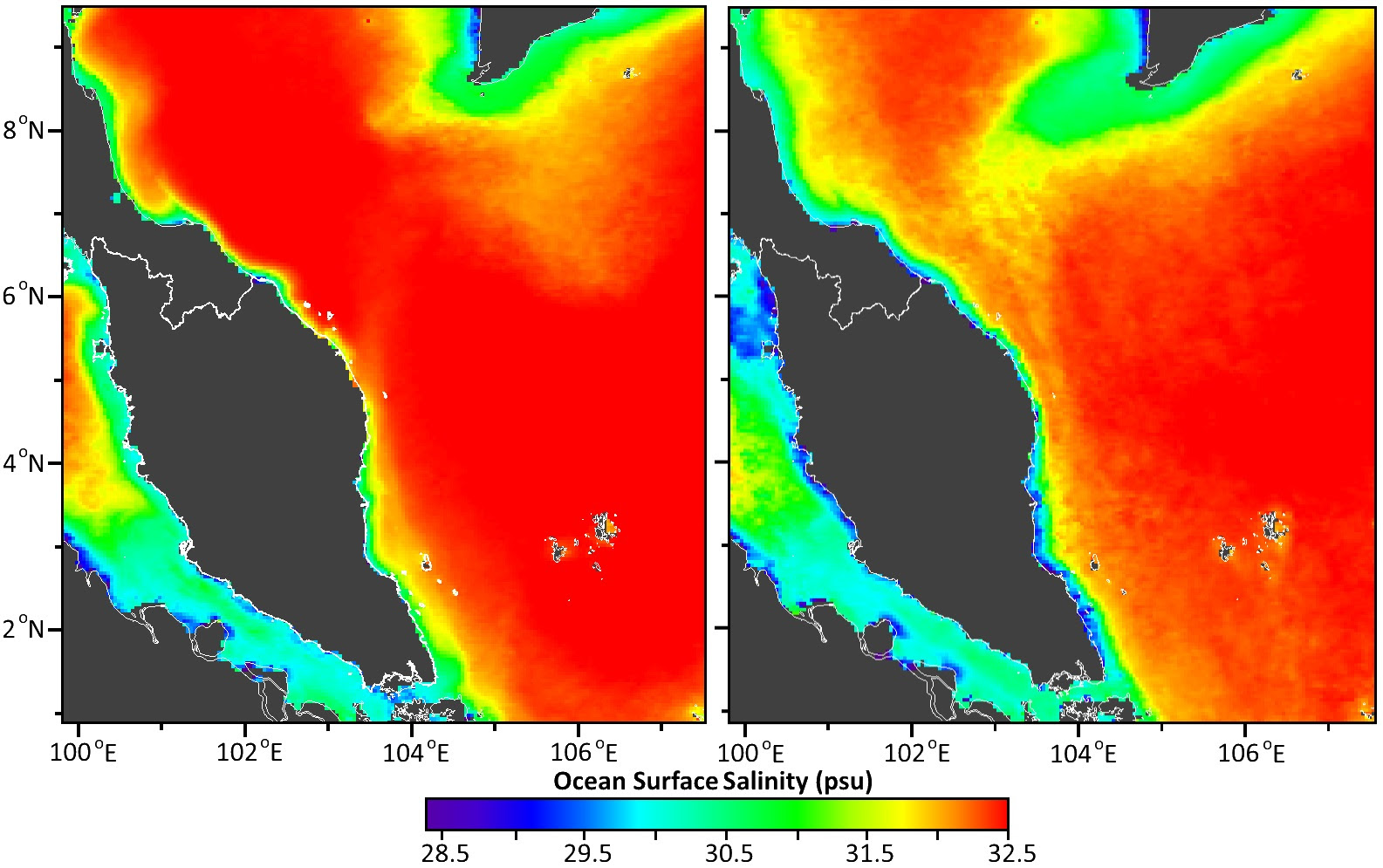
                  Ocean colour could serve as a reliable proxy for salinity, opening the door for more frequent and detailed measurements.


                  Copyright : Dr. Md. Sufian Idris

                  Measuring salinity at the ocean’s surface is important for tracking global ocean circulation as well as local ecosystem health. A research team from Universiti Malaysia Terengganu have proposed a new method to measure sea surface salinity using ocean colour as a proxy.Reported in the Pertanika Journal of Science & Technology, this method could improve monitoring frequency and resolution, particularly for coastal areas.

                  Salinity is the concentration of salt ions in a volume of water. While the total salt content of the ocean remains fairly stable, salinity can vary as the ocean’s volume changes when fresh rain, river water and melted ice enter the ocean, and when seawater freezes or evaporates. Some areas get saltier and others fresher as these processes occur, collectively known as ‘the hydrological cycle’.

                  Besides affecting marine organisms, salinity is also a key player in ocean circulation. Saltier, denser water sinks beneath lighter, fresher water, helping drive the massive conveyer belt carrying seawater around the world. A space-based satellite currently measures sea surface salinity all over the globe using a metric called ‘microwave emissivity’. The Aquarius satellite, operated by the U.S. National Aeronautics and Space Association (NASA), takes one measurement for every 150 square kilometres of ice-free ocean, passing over the same spot once a week.

                  Marine scientist Md Idris Suffian and colleagues wondered if they could use images taken from another pair of satellites that cover the entire ocean daily, and on a much more detailed scale — one picture for every one square kilometre. To do this, they needed to confirm that they could use ocean colour captured in the optical images to determine salinity.

                  Ocean colour is partly determined by how much organic matter is dissolved in the water, which gives it a green, yellow or brown tint, rather than the usual blue. By testing seawater samples taken along the east coast of Malaysia during different seasons, the researchers found a reliable inverse relationship between the amount of coloured dissolved organic matter (CDOM) and salinity. Based on this relationship, they were able to develop a mathematical algorithm that could be used with the satellite images to derive salinity. They use the colour data captured in the images, specifically in the deep blue part of the spectrum, to determine the amount of organic matter, and then compute salinity.

                  The researchers note, however, that the performance of the algorithm may vary from region to region, depending on the degree of mixing between freshwater and seawater. Especially in areas with heavy river flows and high levels of organic material, the conservative relationship between dissolved organic matter and salinity could be altered so much that it no longer fits the algorithm. They recommend further testing to improve the algorithm.

                  For more information about this research, please contact:

                  Dr. Md. Sufian Idris
                  School of Ocean and Environmental Sciences
                  Universiti Malaysia Terengganu
                  21030 Kuala Terengganu, Terengganu Darul Iman
                  Malaysia
                  Email: [email protected]
                  Phone: +(609) 668 3284

                  About Pertanika Journal of Science & Technology (JST)
                  Pertanika Journal of Science & Technology (JST) is published by Universiti Putra Malaysia in English and is open to authors around the world regardless of nationality. Currently, it is published twice a year in January and July. Other Pertanika series include Pertanika Journal of Tropical Agricultural Science (JTAS), and Pertanika Journal of Social Sciences & Humanities (JSSH).

                  Pertanika Journal of Science & Technology aims to provide a forum for high quality research related to science and engineering research. Areas relevant to the scope of the journal include: bioinformatics, bioscience, biotechnology and bio-molecular sciences, chemistry, computer science, ecology, engineering, engineering design, environmental control and management, mathematics and statistics, medicine and health sciences, nanotechnology, physics, safety and emergency management, and related fields of study.

                  Website: http://www.pertanika.upm.edu.my/

                    Finding the Right Translator

                    Translators in Malaysia

                    It’s Beautiful but What does it Mean?

                    In the age of Google Translate some would think that finding the right translator might be less of a concern for business people.  The Malaysia Global Business Forum over the years has dealt with delegations from all over the world and seen first-hand what a difference a good translator can do and what happens when communication becomes strained because of “lost in translation” moments.

                    Online translation might work when exchanging emails, to get a drift of what the other person is trying to communicate but when it comes to documents, contracts, certifications and any official letters, a translator needs to deal with them.

                    For Malaysian business people when traveling to a country where English is not the first language a translator can be your best ally, many have local knowledge of business practices and social protocols which can go a long way when it comes to communicating beyond just words.

                    What should you look for when finding a good translator:

                    1. Look for experienced and qualified professional translator (some translators specify in certain industries)
                    2. Is the translator a native speaker or near native speaker
                    3. Make sure the company has a privacy policy and can sign a Non-Disclosure Agreement (NDA)
                    4. And find a translator that fits your budget

                    Moving forward the Malaysia Global Business Forum will continue to assist the international business community come together and do business.  Contact us is you need a translator, we will recommend one of our panel translators and let us know what we can do to assist during your next business trip to Malaysia. BUSINESS-LIFESTYLE-REVIEW-Banner-e1452321790903-2

                    Business Lifestyle Review