


Almost 10 years after the first artefact was acquired by the Islamic Arts Museum Malaysia (IAMM), ‘More Than a Day as a Tiger: The Legacy of Haider Ali and Tipu Sultan of Mysore (1761-1799)’ exhibition, which presents a fascinating collection of items related to Kingdom of Mysore, is now on display at Gallery 2 of the museum.
The IAMM exhibition explores the lives and legacies of Haider Ali and his son Tipu Sultan, and sheds light on the military prowess of the duo who defeated one of history’s most dominant colonial powers – the British East India Company (EIC) several times during the Anglo-Mysore war.
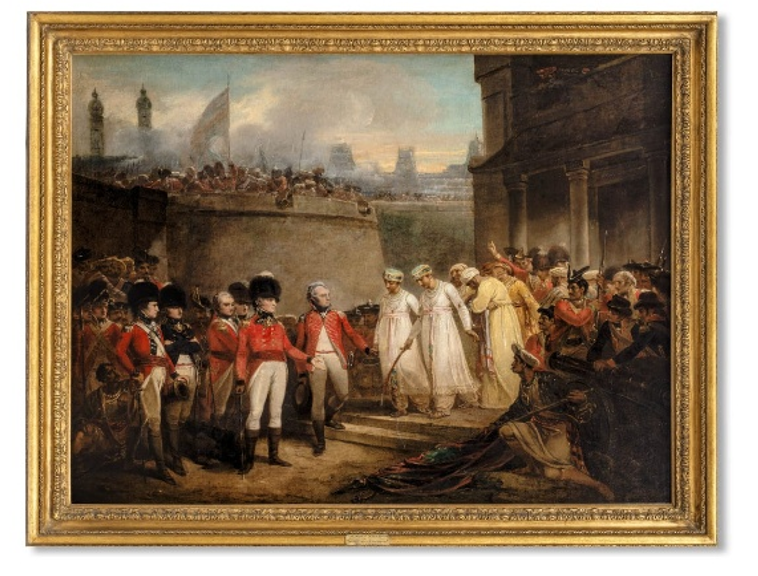
Tipu Sultan was eventually killed and defeated in 1799 after the EIC joined forces with allies in neighbouring states to bring down the ruler at Srirangapatna – the capital of the Kingdom of Mysore.
The title of the exhibition encapsulates Tipu Sultan’s famous quote: “It is far better to live like a tiger for a day than to live like a sheep for a hundred years.” This phrase came to represent his unwavering fight against colonial dominance.
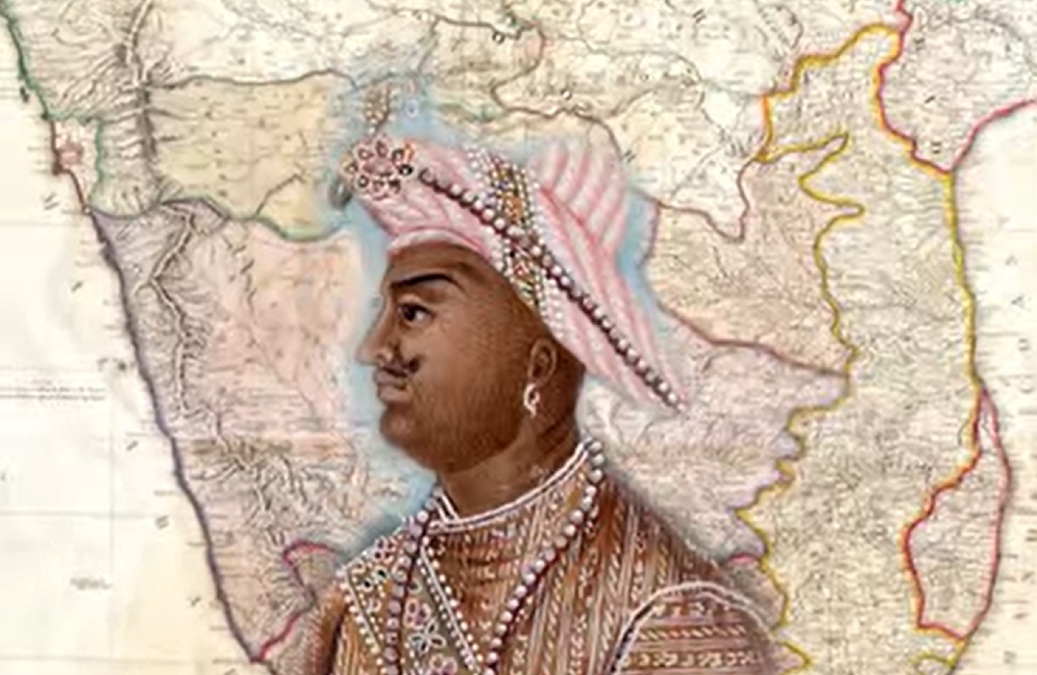
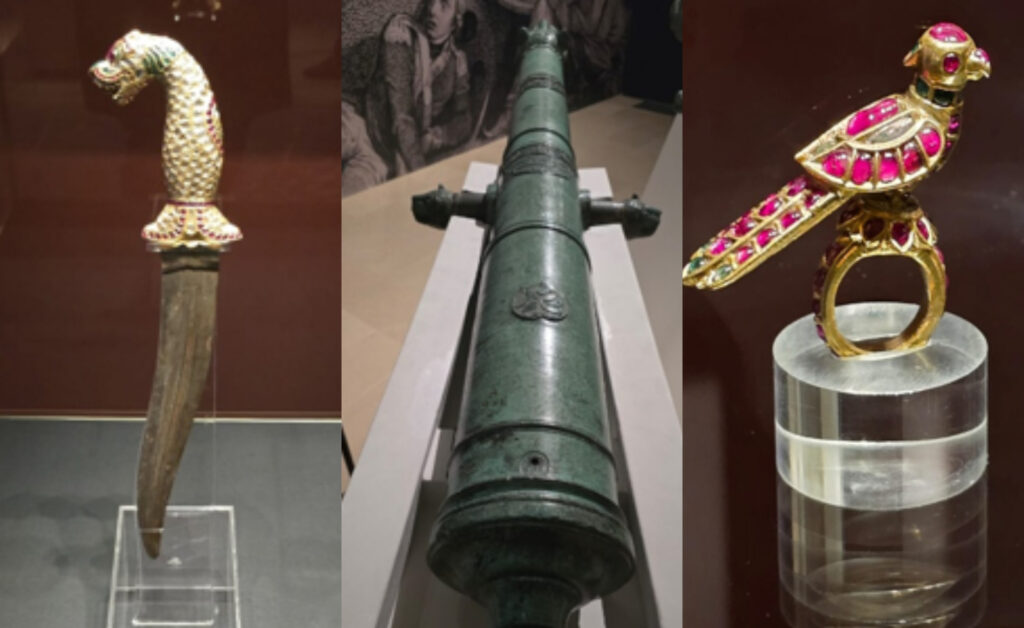
The father and son were also respected for their technologically advanced weaponry – crafted in the royal armoury, their deft military strategies, in addition to the refined cultural imagery and symbolism captured in some of the artefacts displayed in the exhibition.
After the kingdom fell into the hands of the EIC, objects belongings of the Mysore royal family were looted and distributed to among the military officers, collectors and museums in Britain. The IAMM acquired many of the collections in this exhibition via auctions in the United Kingdom.
This had to be followed by careful planning to transfer and transport the delicate items, in addition to managing the paperwork and claims over what could be deemed as national treasures.
Many of the items carry the tiger theme and among the notable items are the weaponry, jewellery and paintings, among other items.
Among the 89 artefacts on display at the exhibition is Tipu Sultan’s ‘Bedchamber Sword’ that is likely linked to the 37 dreams of war and destruction of the land that he had written about in his journal. Accounts suggests that the ruler slept alone in his bedchamber that was secured from within.
Beside him at were two pairs of pistols and a sword – believed to be the one currently on display at the exhibition.
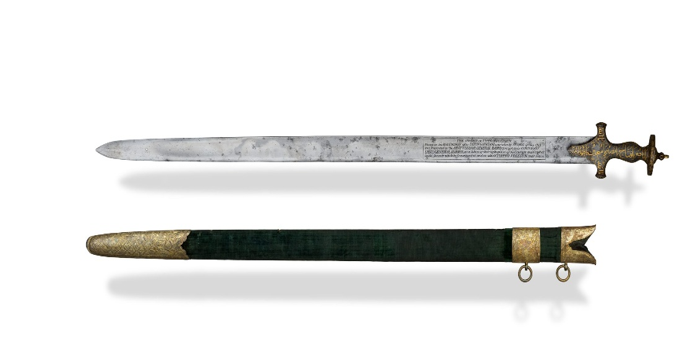
The hilt of the sword has inscriptions in Persian language that reads: “O Allah, O The Helper, O The Ever Opener, O The Aider, O The Evident!”
Regarded as spoils of war it was presented to Major General David Baird, the commanding officer of the 1799 battle in which Tipu Sultan was killed, as a trophy for winning the battle at Seringapatam, after Baird’s failed attempts previously. An inscription of the win and praise for Baird was etched onto the sword that once belonged to the mighty ruler.
Another item of interest is one of eight original gem-set finials that adorned the throne of Tipu Sultan. The remaining three finials are in the United Kingdom, and the whereabouts of the remaining four are unknown.
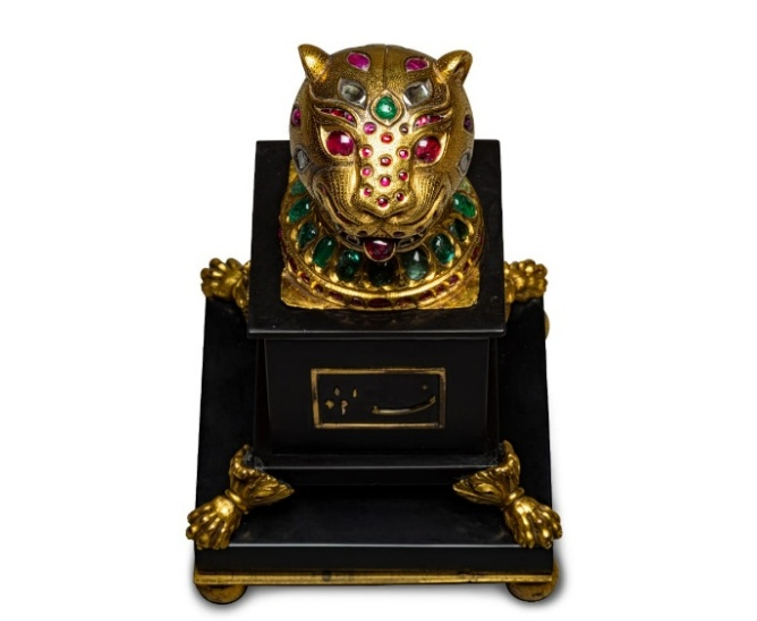
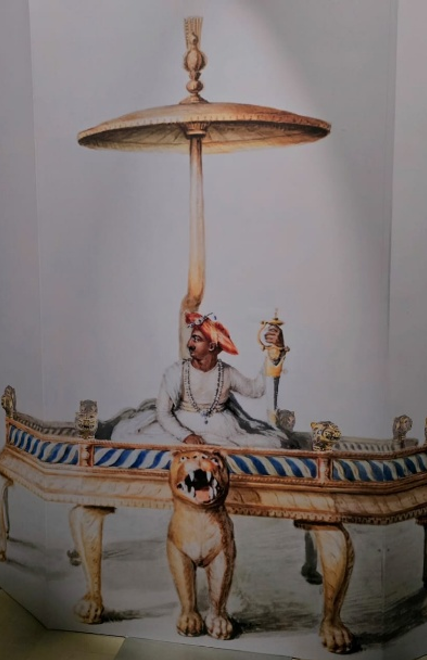
Also on display is a wooden five-clawed paw that is symbolic of the tiger, the plaque at the bottom of the claw reads: “Capture of Seringapatam / 4th May 1799 / Foot of the tiger which supported the platform on which stood Tipu Sultan’s throne.”
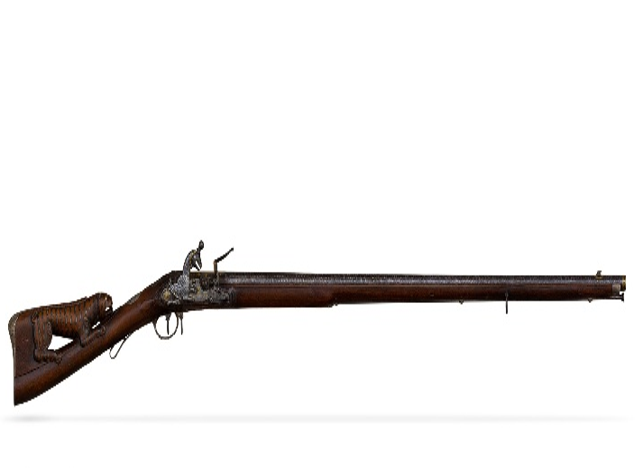
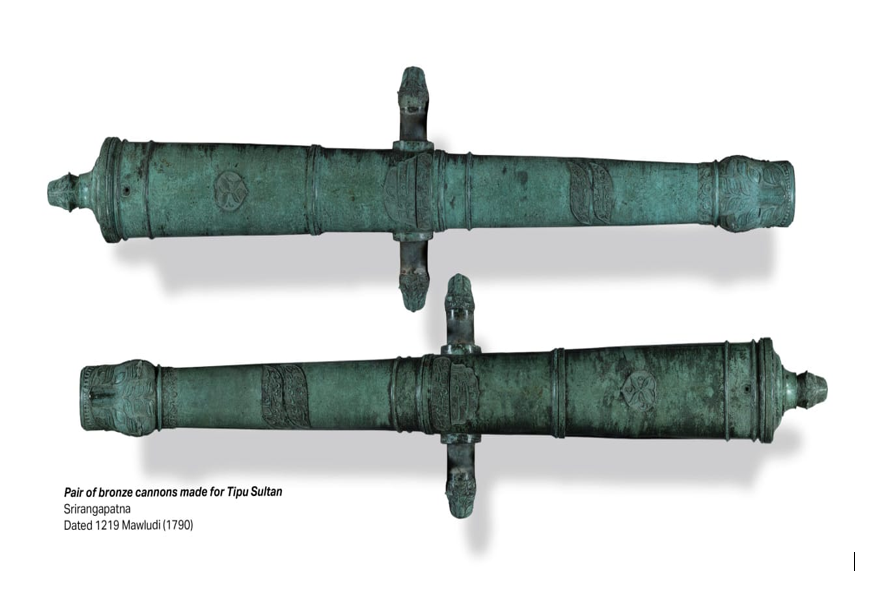
Ornate artillery and weapons including canons, guns and swords, adorned with writings and carvings – crafted in the royal armoury are also among the fascinating displays.
The exhibition launched by Prime Minister Datuk Seri Anwar Ibrahim on 5 August will be on at Gallery 2, IAMM from 6 Aug 2025 to 11 January 2026.
After this duration, most of the artefacts will be transferred to the arms and armour gallery.
For more details, visit https://iamm.org.my.
 This article originally appeared on Scoop.my and was written by Maria J. Dass.